


CBU, SKD and CKD: How VIGROUS Ships Mobility Scooters
For overseas distributors, importing mobility scooters from China involves more than choosing a model and its specifications. The way the vehicle is packed and shipped can also affect container loading, local assembly, and the work required after delivery.
VIGROUS uses three export methods in its regular business: CBU, SKD, and CKD. The difference is mainly about how much of the vehicle is assembled before shipment and how much assembly is completed at the customer’s side.
For distributors planning their local mobility scooter sale operations, understanding these three methods makes it easier to discuss the right shipping option before placing an order.
CBU: Complete Vehicle Export
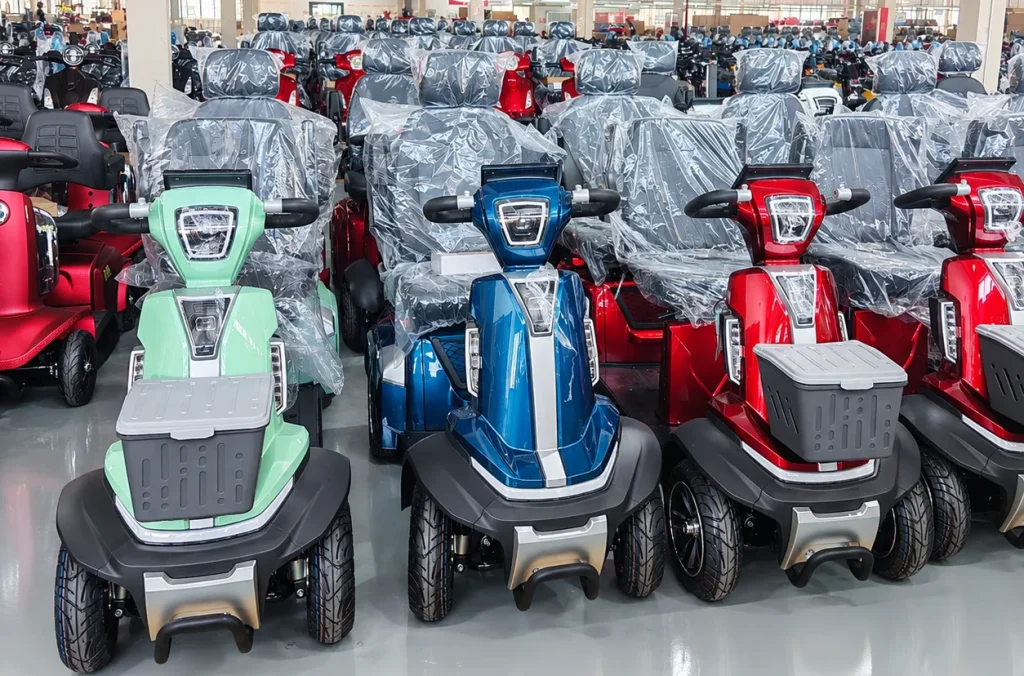
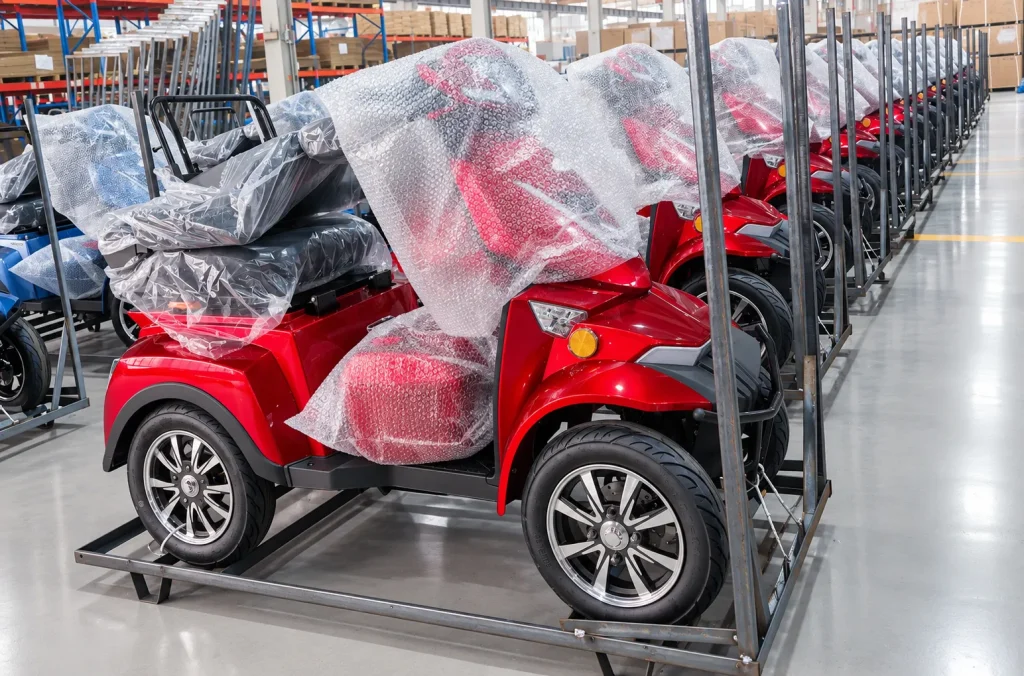
CBU stands for Completely Built Unit. The mobility scooter leaves the factory as a complete vehicle.
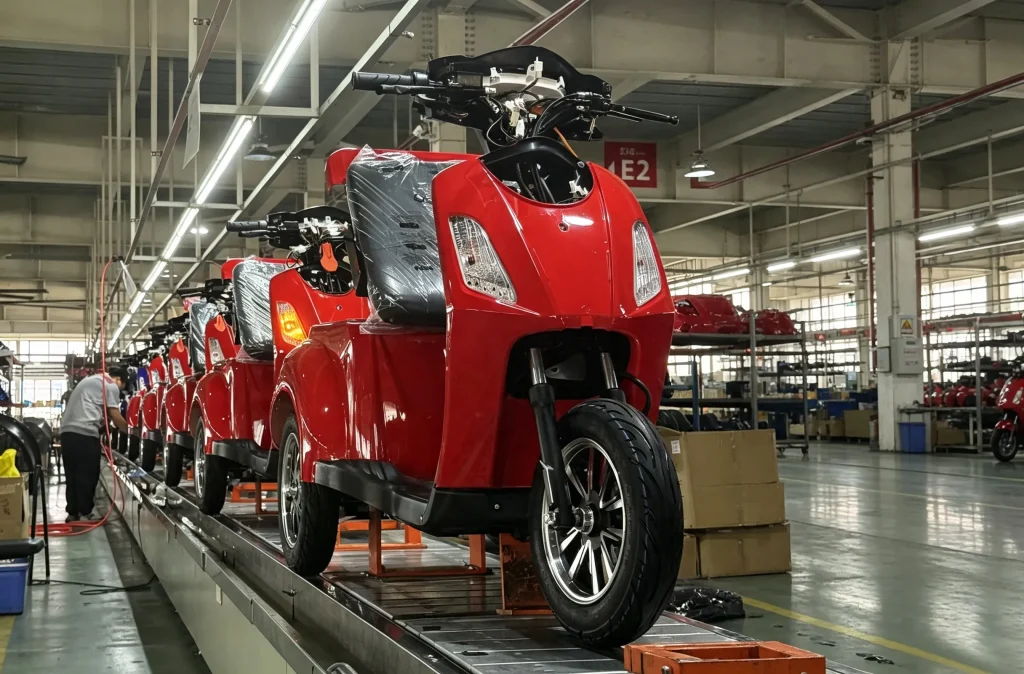
At VIGROUS, the vehicle is assembled, inspected, and packed before shipment. The distributor receives a largely finished product and does not need to carry out major assembly work before starting their mobility scooter sale business.
This option is useful for distributors without a local assembly setup. It also keeps the work after delivery relatively simple.
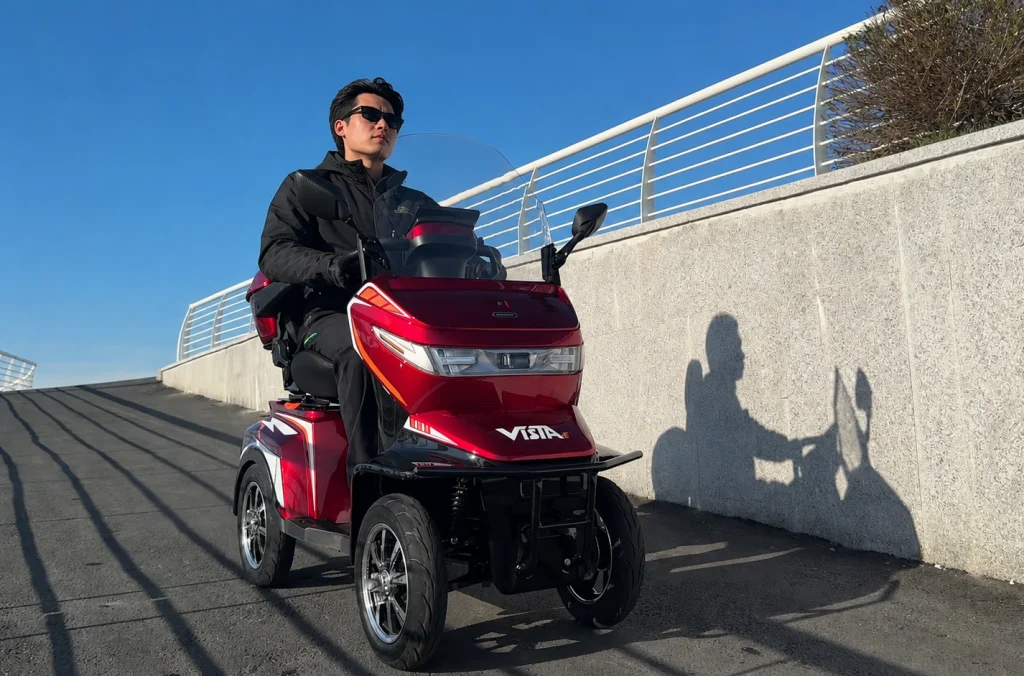
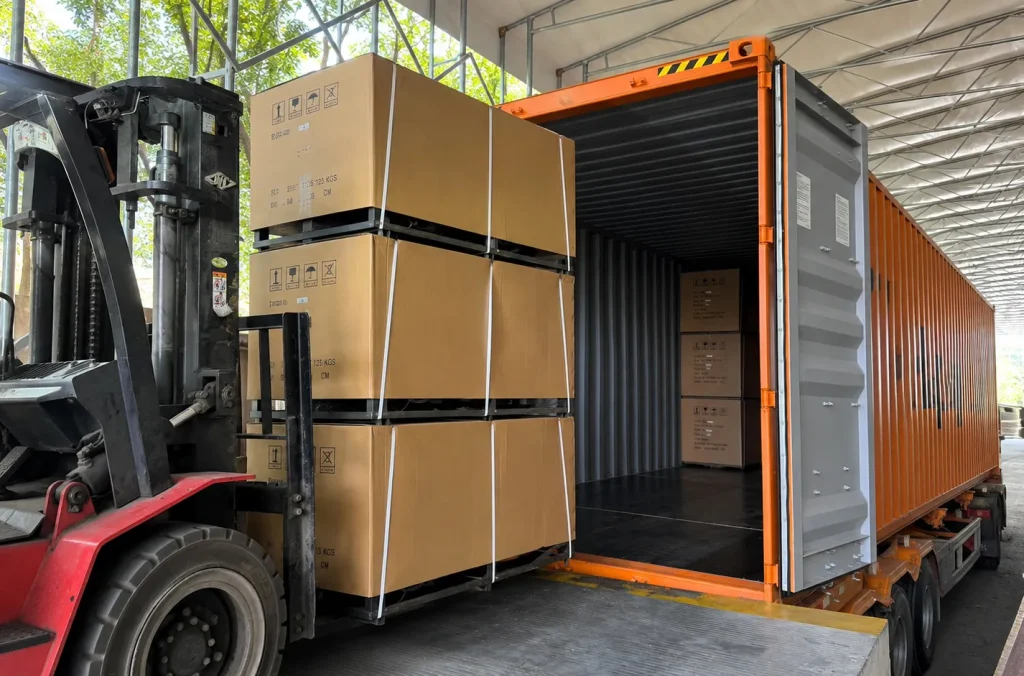
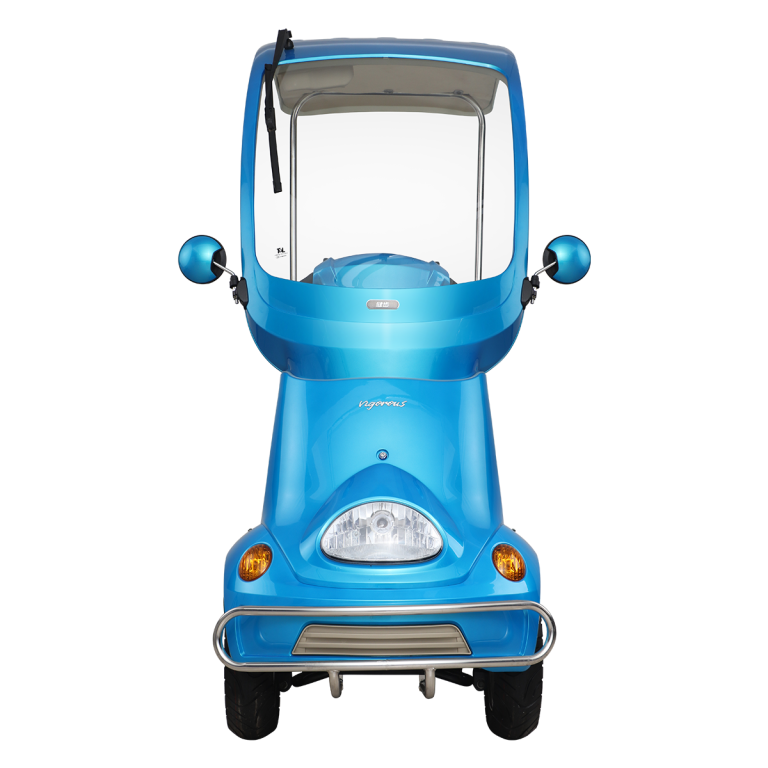
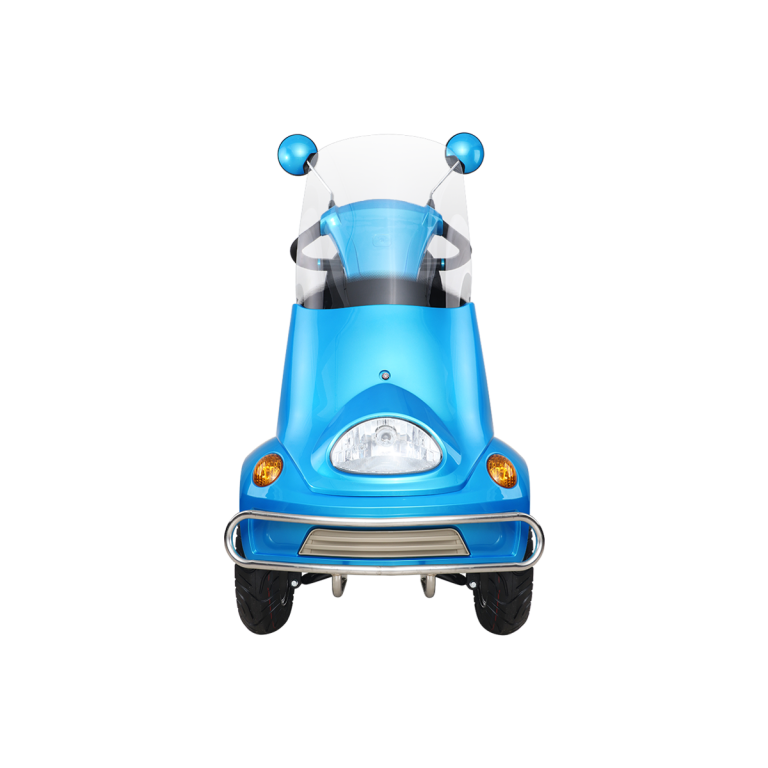
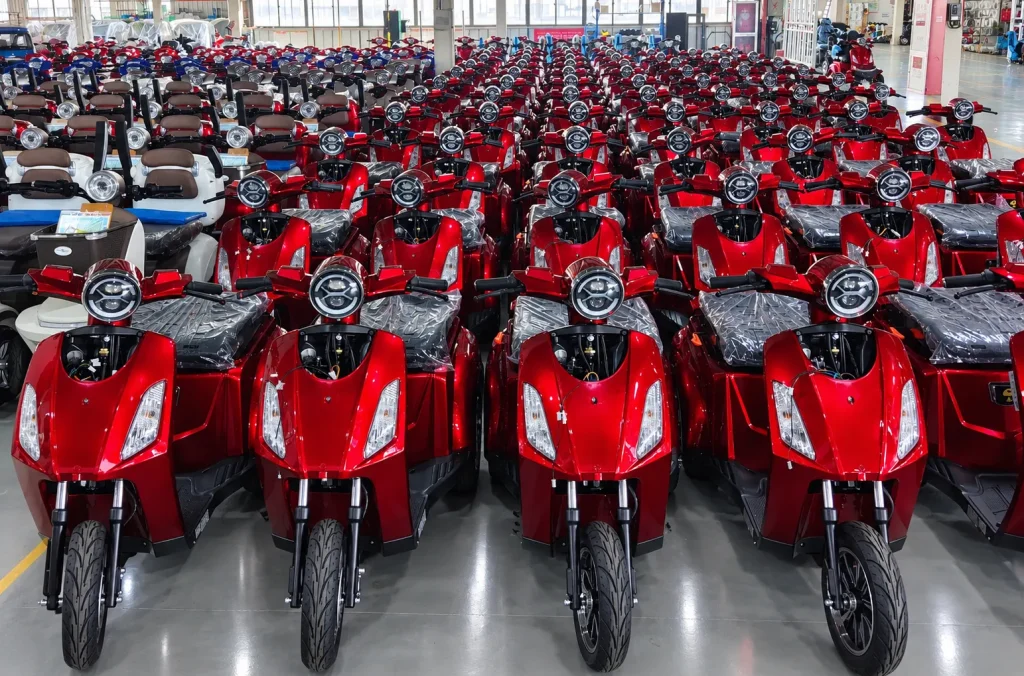
For example, around 44 Vista-1 units can be loaded into one container using the CBU method.
SKD: Semi Knocked Down
SKD stands for Semi Knocked Down. Instead of shipping the vehicle completely assembled, VIGROUS removes selected parts before packing.
For applicable models, the main parts removed include:
- Front wheel
- Front wheel mudguard
- Head cover
- Seatback
The main body remains assembled. Once the shipment arrives, the distributor reinstalls these parts before putting the vehicle into their mobility scooter sale operation.
For one SKD vehicle, the local assembly time is about 30 minutes. The work is mainly limited to reinstalling the parts that were removed for shipping.
Vista-1: CBU vs. SKD Loading
The Vista-1 provides a clear example of why a distributor may consider SKD.
Container Loading Example — Vista-1
CBU: about 44 units per container
SKD: about 75 units per containerDifference: about 31 additional units per container
In this example, SKD increases the loading capacity by about 70% compared with CBU.
For distributors handling larger mobility scooter sale orders, this difference can be an important factor when planning shipments.
The loading figure is based on VIGROUS’s actual Vista-1 export example. The final loading plan is confirmed according to the specific model and packing arrangement.
Which VIGROUS Models Can Use SKD?
SKD is not suitable for every model in the VIGROUS range.
The following series or models mainly use CBU:
- Lunar Series
- Vivago
- Polaris
- V28
Other models may be considered for SKD according to their structure and the customer’s order requirements.
For distributors building a mobility scooter sale range, this distinction is worth checking before choosing the shipping method. The same export method cannot simply be applied to every model.
CKD: Completely Knocked Down
CKD stands for Completely Knocked Down. It takes the disassembly process further than SKD.
Instead of removing only a few parts, the vehicle is separated into more individual components for packing. The customer then completes more of the assembly locally.
VIGROUS mainly uses CKD for the Vista Series, including:
- Vista-1
- Vista Quater-1
- Vista Quater-L1
CKD is intended for distributors that already have a local assembly setup. More of the vehicle assembly is completed after the shipment arrives, so the customer needs enough working space and people to handle the process.
For CKD orders, VIGROUS can provide assembly photos or videos as a reference. This gives the local team a visual guide instead of relying only on written instructions.
For a distributor with an established mobility scooter sale operation and local assembly capability, CKD can therefore be considered for applicable Vista models.
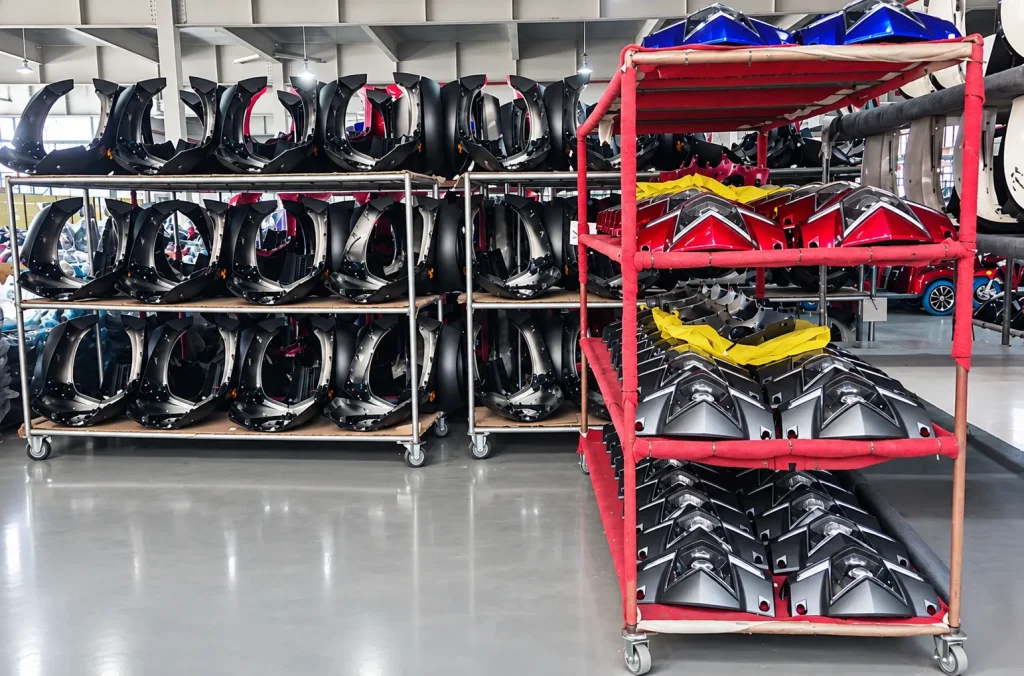
CBU, SKD and CKD: What Is the Difference?
The easiest way to understand the three methods is to look at where the assembly work takes place.
| Export Method | Assembly in China | Work at Customer’s Location | Typical Setup |
| CBU | Vehicle is largely completed | Little or no major assembly | Sales and warehouse operation |
| SKD | Most of the vehicle is assembled | Reinstall selected parts | Basic local assembly |
| CKD | Vehicle is separated into more parts | More complete vehicle assembly | Local assembly operation |
The main decision is therefore not simply about shipping volume.
A distributor should first look at its own operation: Can the local team assemble the vehicle? How much warehouse space is available? How much assembly work is practical after delivery?
These questions are more useful than choosing CBU, SKD, or CKD based only on the number of units loaded into one container.
How to Choose an Export Method
For distributors without local assembly capability, CBU keeps the process after delivery simple.
For distributors with warehouse space and basic assembly staff, SKD provides a middle option. The vehicle remains largely assembled while selected parts are removed for shipping.
For distributors with a more established local assembly operation, CKD can be considered for applicable Vista Series models.
There is also a simple way to look at the decision:
No local assembly → CBU
Basic assembly capability → SKD
More complete local assembly capability → CKD
Container capacity is another factor. The Vista-1 example shows that changing from CBU to SKD can increase the number of units loaded into one container, which may be relevant when planning larger mobility scooter sale orders.
The final choice should be confirmed together with the model and order plan rather than applying one method to the entire product range.
How VIGROUS Supports Different Export Methods
VIGROUS works with CBU, SKD, and CKD according to the model and the customer’s local setup.
For SKD, the factory confirms which parts are removed and how the vehicle is packed before shipment.
For CKD, VIGROUS mainly supports applicable Vista Series models and can provide assembly photos or videos for the local team.
If you are planning a mobility scooter sale program and are not sure which export method fits your market, you can send VIGROUS the models you are interested in, your expected order quantity, and whether you have local assembly capability.
VIGROUS can then confirm the applicable shipping method and provide the corresponding packing and export information for your order.
