

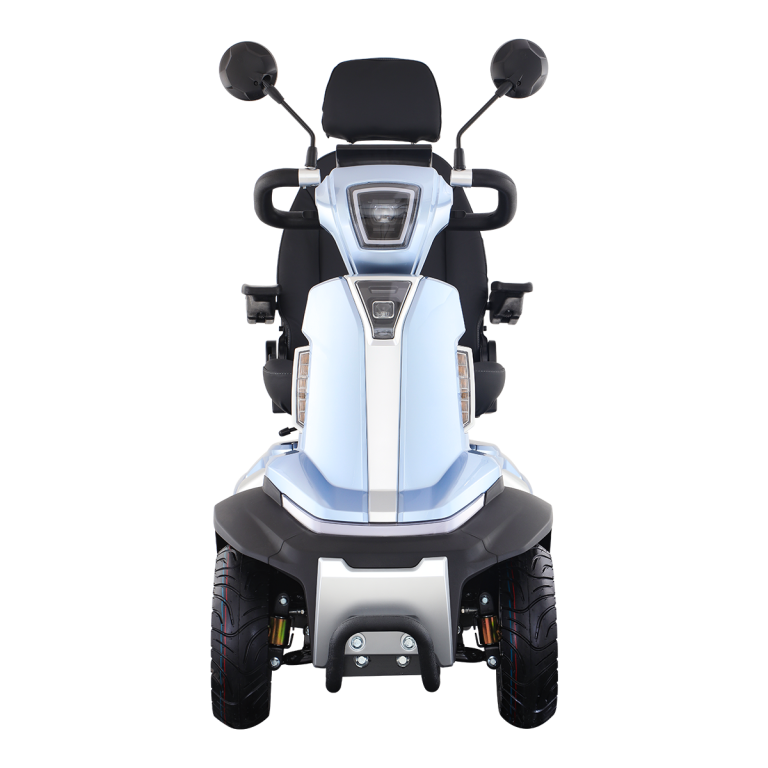
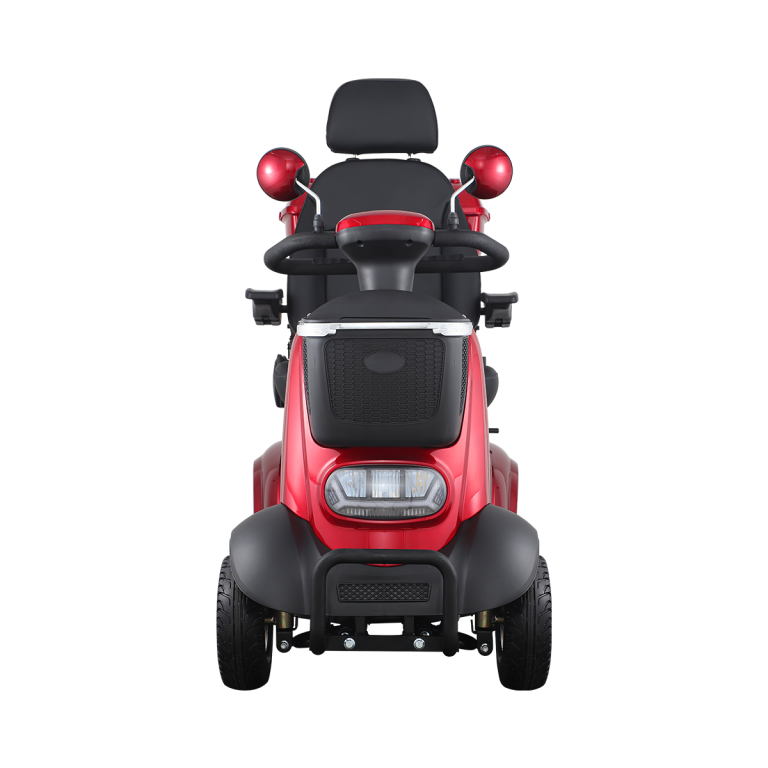
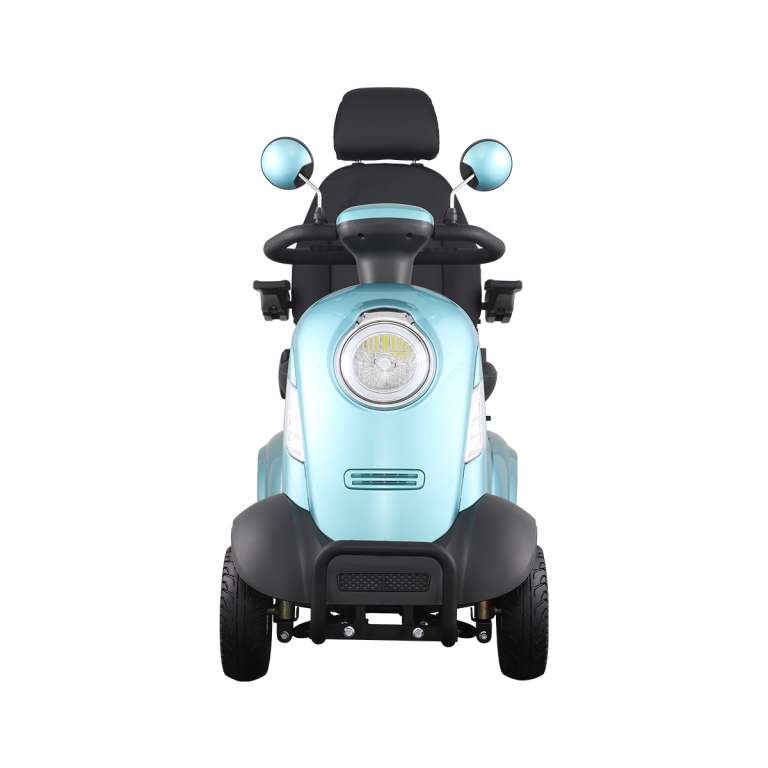
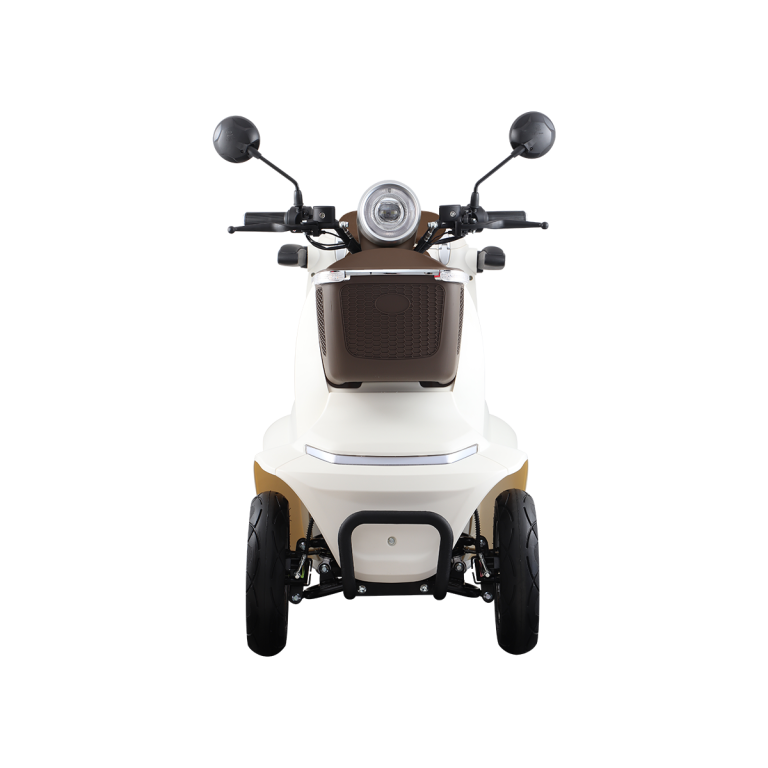



Outdoor Mobility Scooter Brakes:Magnetic vs. Mechanical
When choosing an outdoor mobility scooter for an elderly family member, safety is always the top priority, and the braking system serves as the most critical line of defense. The debate between electromagnetic brakesand traditional mechanical handbrakes has been ongoing online. However, with over a decade of experience as a source factory in outdoor mobility scooter manufacturing, we want to share an important insight: there is no absolute better option between the two—only the one that is more suitable for your specific needs.
Traditional mechanical handbrakes remain the first choice for many users due to their intuitive control. In contrast, electromagnetic brakes offer passive safety protection for older adults with their unique stop when you let go feature. So, which type is better suited for your family’s elder? It largely depends on their physical condition, driving habits, and daily road environments. Let’s dive into the practical scenarios to help you pick the perfect fit.

Understanding the Core Mechanics of Outdoor Mobility Scooter Brakes
- Electromagnetic Brakes: Passive Safety and Automatic Parking
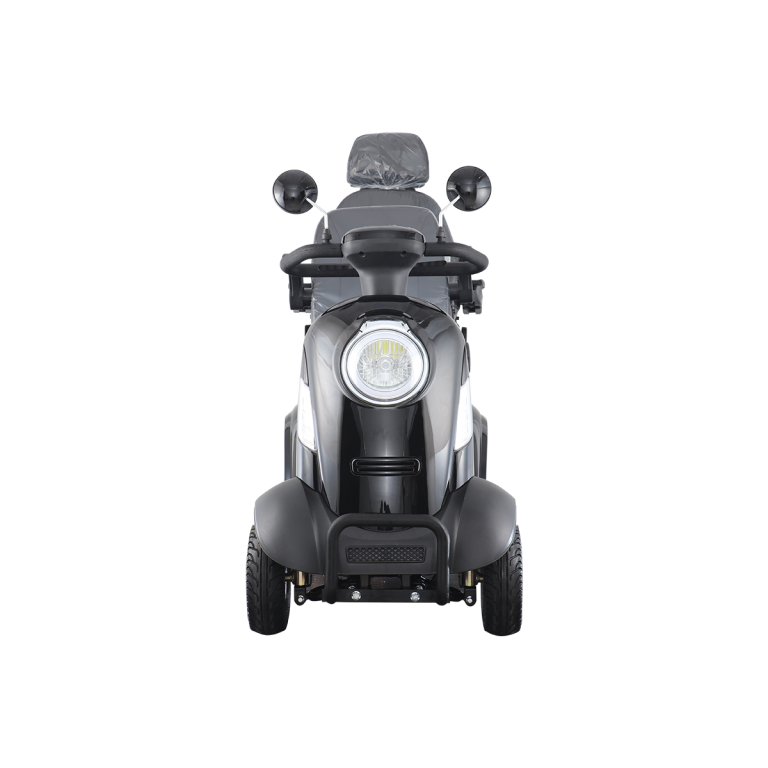
The core logic of an electromagnetic brake is “move when powered, stop when unpowered.” During driving, an electromagnet engages to release the brake; when the user lets go of the lever or the power cuts off, a spring automatically clamps the brake pads. It acts like an invisible safety officer constantly monitoring the vehicle’s status. If an elderly driver encounters an unexpected situation and instinctively lets go out of panic, the internal strong spring will instantly lock the wheels. This is especially crucial on steep slopes in underground garages, where the ‘stop-when-released’ feature helps keep the vehicle stable and minimizes the risk of rolling backward.
- Mechanical Handbrakes: Active and Linear Speed Control
The mechanical handbrake follows the traditional “squeeze-to-brake” logic, consistent with common e-bikes. To slow down, the driver must actively squeeze the brake handle. This action pulls a steel cable (or hydraulic tube) to engage the brake caliper on the wheel, using friction to stop the vehicle.
For elders who are still physically agile and quick-reacting, a mechanical handbrake often provides a greater sense of security. On long downhill stretches or slippery roads, they can finely adjust the speed by controlling how hard they squeeze the lever—a delicate linear control that electromagnetic brakes currently cannot replace. However, this also means that when parking on a slope, the senior must remember to manually engage the “parking lock,” otherwise, there is a risk of the vehicle rolling away.
Comparison Table: Magnetic Brakes vs. Handbrakes
| Evaluation Dimension for Outdoor Mobility Scooters | Choose Electromagnetic Brake (Magnetic) | Choose Mechanical Handbrake |
| Operation Habit | Prefers simplicity; stops upon releasing the lever | Accustomed to tradition; enjoys actively squeezing the brake |
| Physical Condition | Weaker grip strength, or concerns about reaction time | Strong hands and feet, agile reactions, has riding experience |
| Slope Safety | Worried about rolling back; desires automatic parking | Knows how to use the parking lock skillfully |
| Control Needs | No need for frequent, fine speed adjustments | Needs to freely control braking force based on road conditions |
Matching Brake Types to a Senior’s Physical Condition
For the vast majority of high-age seniors, elders trying an outdoor mobility scooter for the first time, or those with declining hand-foot coordination and slower reactions, an electromagnetic brake model is the absolute best choice. Especially for those worried about handling emergencies or those too weak to press a mechanical brake, the magnetic brake’s “lever operation” is extremely user-friendly—simply push forward to go, and let go to stop, requiring no extra braking action. This greatly lowers the learning curve and psychological burden.
On the other hand, if the elder has a long-term habit of riding two-wheeled e-bikes, possesses flexible limbs, quick reactions, and has solid muscle memory for the traditional “twist throttle, squeeze brake” operation, a handbrake model is worth considering. For these seniors, changing decades of driving habits to adapt to a new lever operation might actually cause discomfort. The prerequisite, however, is that the elder’s grip strength must be sufficient to handle frequent braking operations.
Maintenance and Lifespan: Long-term Reliability Differences
Beyond operation and safety, maintenance and durability are practical concerns for many families.
A mechanical handbrake uses a classic steel cable transmission structure. Its technology is mature and highly universal. Over long-term use, the steel cable may loosen due to stretching or age from rust. If the brake feels loose, a repair shop can simply tighten the screws and adjust the cable tension. Even if the brake cable ages and needs replacement, a standard cable is inexpensive, and labor costs are very low—most local bike or e-bike repair shops can easily handle it.
An outdoor mobility scooter with an electromagnetic brake operates on a “power-off locking” physical structure, consisting mainly of an electromagnetic coil, springs, and friction pads. Without complex electronic sensor wear, its internal mechanical structure and coil are usually extremely durable, provided it isn’t frequently used in a semi-engaged friction state. Its average lifespan can often reach 5-10 years or even longer, with virtually no need for daily lubrication or adjustment.
While the probability of electronic component failure (like the coil or controller) is extremely low, ordinary roadside shops might not be able to fix it if a fault occurs. Repairs typically require contacting brand after-sales support or using specialized replacement parts.
Real-World Scenarios: Power Failures and Emergency Braking
With an outdoor mobility scooter using electromagnetic brakes, once the vehicle loses power (or the key is removed), it will automatically lock. To push it manually, simply find the “freewheel lever” (usually red or yellow) under the seat or near the motor, and flip it to the “neutral/push” mode. After pushing, be sure to flip it back to the “drive” mode to ensure safety. With a mechanical handbrake, even if the battery is completely dead, the vehicle can still be freely pushed, and it will stop as long as you squeeze the handbrake.
The locking speed of an electromagnetic brake is relatively fixed, determined by the internal spring and electronic control program. Suddenly letting go during a high-speed downhill descent will result in a noticeable “jerk” (the mechanical locking process). Conversely, the braking distance and locking speed of a mechanical handbrake depend entirely on the elder’s hand explosive power. If the downhill speed is too fast and the senior panics and “squeezes it to death,” there could be a risk of leaning forward or tipping over due to inertia.
Choosing the Right Outdoor Mobility Scooter Configuration
Lightweight folding models or indoor-to-outdoor mobility scooters (Standard with Electromagnetic Brakes) are typically designed with speeds between 3km/h – 15km/h. They are lightweight and run at slow speeds. In low-speed conditions, the braking force provided by an electromagnetic brake is more than enough.
Large mid-to-high-end off-road models or high-power outdoor vehicles are heavy, powerful, and can reach top speeds of 15km/h – 25km/h or higher. They often face complex highway or mountain road environments. Relying solely on a single electromagnetic brake on long downhill stretches can easily lead to “heat fade,” causing brake failure. Therefore, these vehicles must be paired with large-sized mechanical handbrakes to provide stronger and more immediate physical braking force.
FAQ
How do I push an outdoor mobility scooter when it runs out of power?
- When the vehicle loses power, the electromagnetic brake will automatically be in a locked parking state. To push it manually, simply find the “freewheel lever” (usually red or yellow) under the seat or near the motor, and flip it to the “neutral/push” mode. After pushing, be sure to flip it back to the “drive” mode to ensure safety.
Since handbrake scooters are cheaper, are magnetic brakes more advanced for an outdoor mobility scooter?
- The choice of braking system is determined by the vehicle’s positioning and target user group. High-spec outdoor off-road vehicles use handbrakes because they require high-intensity, instant braking force, not to save on costs.
Regardless of which brake you choose, regular inspection and standardized use are the core of safety. If you are still hesitating, think about your elder’s usual travel habits—are they seeking ultimate peace of mind and safety, or do they prefer a familiar control feel? The answer lies in these details.