


How to Find a Reliable Mobility Scooter Supplier in China?
Table of Contents
Why are global buyers looking to China?
As the global aging trend intensifies, the market for mobility scooters is experiencing explosive growth. Whether in mature markets like North America and Europe or emerging markets in Southeast Asia and South America, the demand for cost-effective and compliant products is evident.
Why are global buyers looking to China? Beyond the cost advantages brought by a robust industrial chain, there is a key reason: “expertise.” Many Chinese factories have accumulated rich experience serving different markets through years of OEM/ODM services. This expertise allows the Chinese supply chain not only to manufacture but also to precisely align with global standards.
However, the reality is direct:
- The number of suppliers in the market is huge, and quality varies significantly.
- Choosing the wrong partner can lead to compliance risks, return losses, or even legal liabilities.
Therefore, for businesses seeking long-term development, the core task is no longer simply finding a supplier, but how to accurately screen and lock in a truly reliable, compliant, and risk-resistant strategic partner.

How to Identify a Trustworthy Mobility Scooter Supplier?
In actual procurement, reliability is not a subjective feeling but something that can be systematically evaluated. We have summarized a core formula: Reliability = Compliance + Stable Capacity + Product Quality + After-Sales Service + Supply Chain Capability.
As a source manufacturer deeply involved in the export of mobility scooters for over a decade, we will analyze these five core dimensions for you.

1. Compliance Qualifications
In 2026, compliance is the cornerstone of business. Taking the European market as an example, CE and EEC certifications are common entry thresholds. It is worth noting that if the product is classified as a medical aid, it must strictly comply with MDR regulations.
Here is a simple verification method: Ask the supplier directly, “Have you undertaken orders for customers in the EU, UK, USA, or Southeast Asia? Can you provide relevant certification documents or test reports?” If the factory can show certification materials and export cases from past projects, it indicates they have crossed the export threshold, making cooperation much safer.
2. Stable Production Capacity
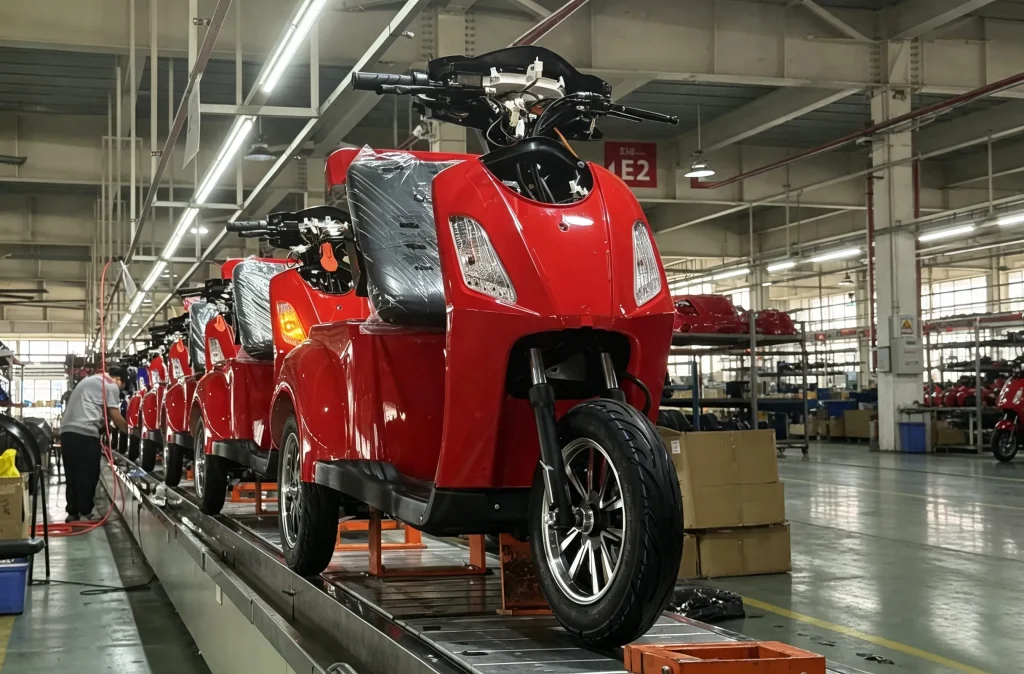
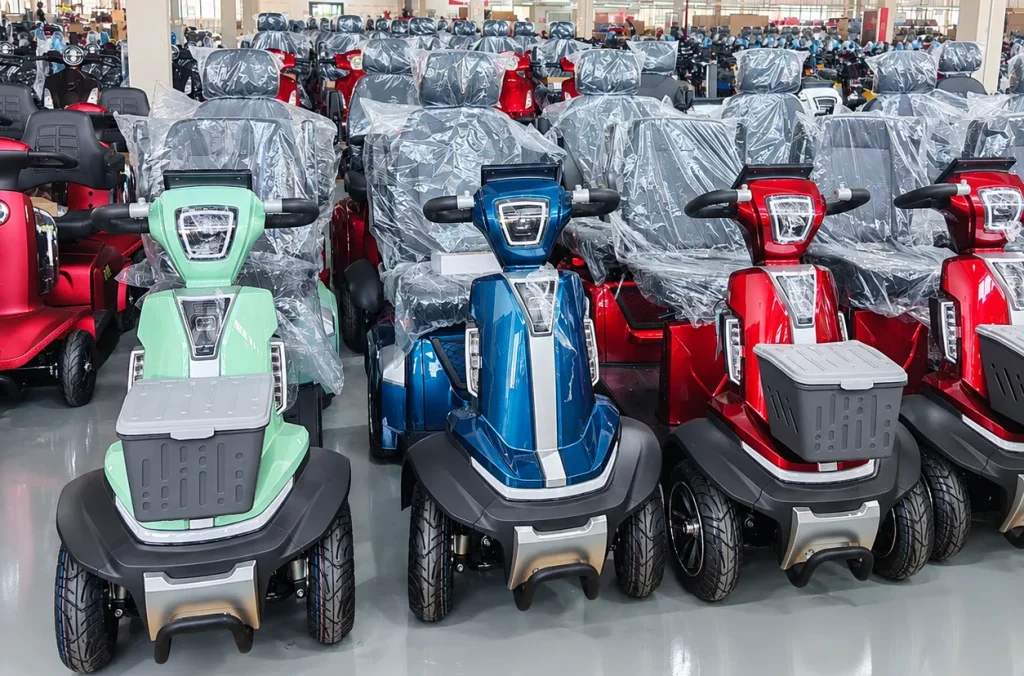
For any global buyer, the stability of a mobility scooter supplier is the foundation of a risk-free supply chain. In procurement, stable capacity means the supplier has the ability to deliver continuously and on time. For beginners, this is the lifeline guaranteeing business continuity. Once the supply chain breaks, your overseas sales channels will face the embarrassment of having no goods to sell.
When evaluating a supplier’s capacity, consider two dimensions:
- Time Dimension: An intuitive method is to look at the factory’s seniority. Generally, factories established for a longer time have higher risk resistance and delivery stability.
- Data Dimension: Understand their annual or monthly output. This is not just about the size of the number but the transparency. A simple principle for judgment is: Suppliers who can accurately report capacity data demonstrate clear control over their production processes, making them more reliable partners.

3. Product Quality
In the mobility scooter industry, true cost-effectiveness is not about low procurement costs but low lifecycle costs—meaning the product lasts long and requires minimal after-sales intervention.
Safety is the bottom line, including the sensitivity of the braking system, the stability of the body structure, and battery safety, all of which relate directly to the user’s life safety. Durability determines the product’s lifecycle, such as the motor’s anti-attenuation capability and the corrosion resistance of the frame material. When screening suppliers, confirm whether the factory possesses standardized factory inspection processes, such as rain shower laboratory data and dynamic road test reports.
If conditions permit, it is advisable to purchase a sample vehicle for testing first. By personally experiencing the comfort and handling, you can verify detailed workmanship, ensuring the product has passed the strictest checks before being delivered to the end-user.

4. After-Sales Service
After-sales service is not just a part of the procurement process but a core element directly affecting the end-customer experience. For purchasers, it must be recognized that the essence of after-sales is the supplier’s ability to solve problems continuously after delivery.
A trustworthy partner will provide standardized warranty services (typically one year) and possess the capability to offer remote technical diagnosis and support. Furthermore, the stability of the spare parts supply chain is crucial. If a product fails and replacement parts cannot be obtained promptly, it will directly lead to a collapse in customer satisfaction, causing irreparable brand damage. In short, a high-quality after-sales service system can greatly reduce your operating costs and is an invisible shield guaranteeing long-term stable business operations.
5. Supply Chain Capability
Many beginners often confuse production capability with supply chain capability. It is no longer limited to the production link but extends to how they accommodate your business model. This includes tolerance for small Minimum Order Quantities (MOQ) and response speed to ODM customization requests (such as appearance, LOGO, and battery specification adjustments).
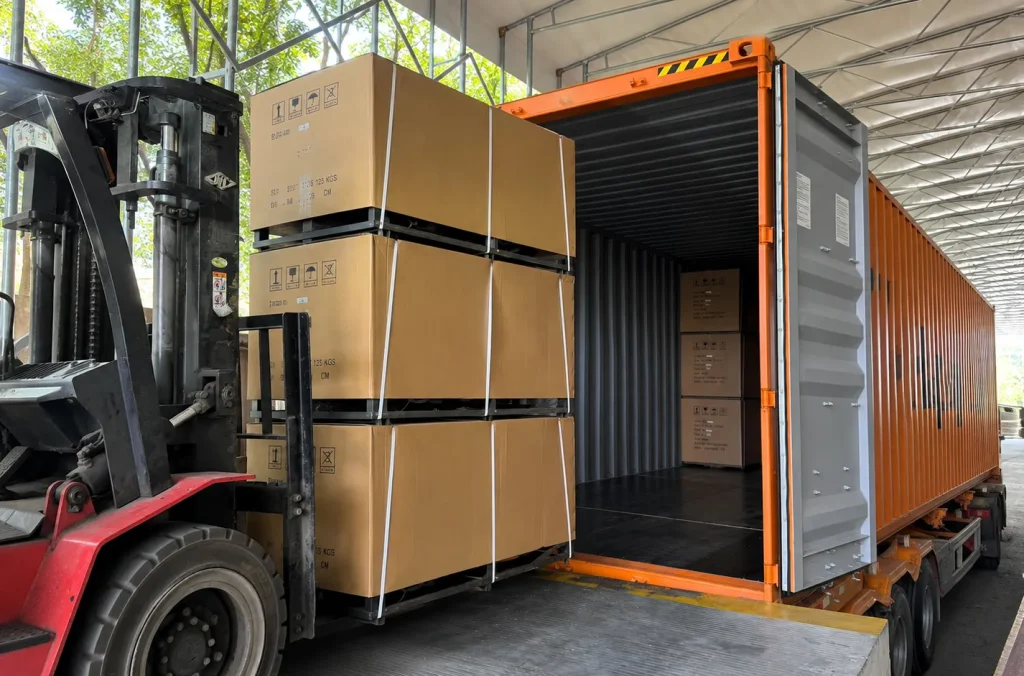
For cross-border business, this capability is particularly critical. Whether the factory has export experience and can properly handle customs declarations, documentation, and compliant packaging directly determines whether the goods can successfully go overseas.
A factory with true “supply chain thinking” will not coldly tell you “we can do it” but will actively help you brainstorm: How to pack to save freight? How to declare to reduce clearance risks? How to stock to reduce inventory pressure? Such a factory can truly help you lower costs and sustain the business.
Complete Screening Process
| Phase | Core Task |
| 1. Initial Screening | Qualification Review & Mobility Scooter Supplier Verification |
| 2. Communication | Requirement Alignment |
| 3. Sampling | Performance Testing |
| 4. Trial Order | Process Validation |
| 5. Evaluation | Establish Cooperation |
Build a Long-Term Stable Relationship
Establishing a supplier relationship is just the starting point; maintaining long-term stable cooperation is the core of supply chain management.
Establish Routine Communication Mechanisms: Regular communication effectively eliminates information asymmetry, ensures both parties are aligned on goals, and helps identify potential risks in time.
Plan Orders in Advance: Don’t wait until the warehouse is empty to rush orders. Plan orders early to give the factory sufficient production time, preventing sales losses caused by stockouts.
Share Market Feedback: Converting end-customer opinions into product iteration momentum helps enhance the product’s market competitiveness.
The essence of long-term cooperation is mutual benefit and win-win results. A factory that can match your business rhythm and face market changes together is your strongest backing during the sales process. Moreover, a cooperative partnership often unlocks better pricing tiers and payment terms, directly improving your profit margins.
Conclusion
Facing complex supplier information, novice purchasers are most likely to get lost in “low-price promises.” But please always remember: In cross-border business, cheap is often the most expensive cost.
The depth of the supply chain determines the height of the brand. May you find that Chinese partner who can not only provide you with high-quality mobility scooters but also grow steadily with you across market cycles.
FAQ
What is the typical lead time for a mobility scooter order?
- It usually depends on the quantity and customization requirements. Standard models typically take 15-30 days, while OEM orders may require more time.
How can I verify the factory of a mobility scooter supplier in China?
- You can ask for their business license, check third-party audit reports (like SGS or TUV), or request a live video tour of their production line.