Planning your bulk order? When shipping via a 40-foot High Cube (40HQ) container, spatial efficiency is directly tied to your bottom line. With years of hands-on experience in mobility scooter wholesale, we understand that precise container planning is essential to protecting your profit margins and avoiding unnecessary logistics overhead.
Whether you are a distributor in Europe or a project manager in South America, you need precise data to calculate your landed costs and retail pricing. The answer isn’t just about stuffing vehicles into a box; it is about balancing clever packaging, vehicle design, and safety.

As a factory that exports full container loads (FCL) every month, we have perfected this process. Below, we detail how we calculate loading capacity and what you need to know to make your import business more profitable.
Container Specifications and Volume
A standard 40HQ container offers a theoretical volume of about 76 cubic meters. However, in actual operation, due to packaging shapes and the need for reinforcement, the usable volume is typically around 68 cubic meters
Here are the specific internal dimensions you need to consider for your logistics planning:
- Internal Length: 12.03m
- Internal Width: 2.35m
- Internal Height: 2.69m
- Effective Loading Volume: ~68 cubic meters
Packaging Methods
Before calculating the quantity, you must confirm your packaging method. We typically offer three main options, each affecting the final count in your mobility scooter wholesale shipment.
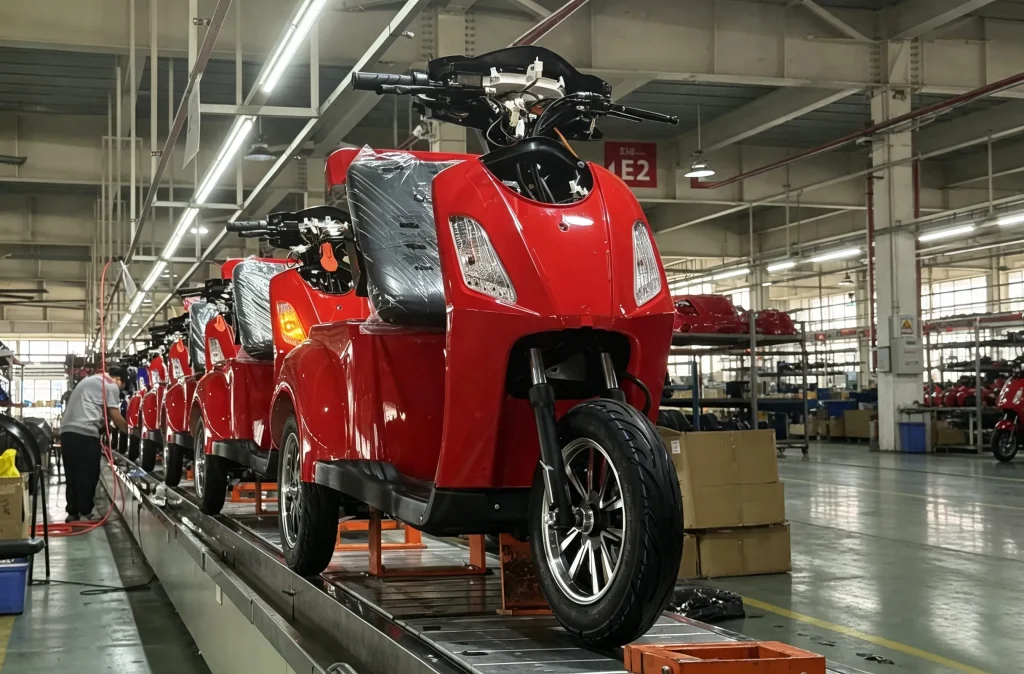
1. SKD (Semi-Knocked Down): This is currently the most mainstream solution for mobility scooter wholesale partners due to its balance of cost and ease of assembly. The vehicle is disassembled into major modules (like front wheels and seat backs), but core components remain connected. The advantage is simple assembly—requiring only basic bolting—and effective volume control.
2. CKD (Completely Knocked Down): This method pursues extreme space utilization. The vehicle is fully dismantled into spare parts and nested into the container. While this can increase loading capacity by over 20%, it requires a highly skilled assembly team and complex parts management, which can lead to after-sales confusion. Unless you have a mature assembly line, SKD is usually the safer commercial choice.
3. CBU (Completely Built Up): This is the most direct delivery method. Vehicles are loaded fully assembled and are ready to ride upon opening the box. However, the logistics cost is very high because the vehicles occupy a fixed amount of space, meaning a container holds half as many units (or fewer) compared to SKD. Therefore, CBU is typically reserved for sample orders, urgent restocks, or high-end custom models that cannot be disassembled.
Loading Capacity Reference Guide
Based on our factory experience, here is a breakdown of how many units fit in a 40HQ container based on the scooter category and packaging method.
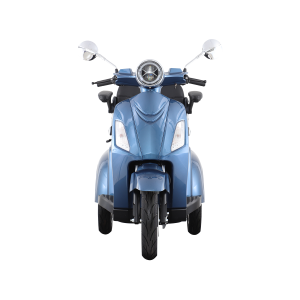
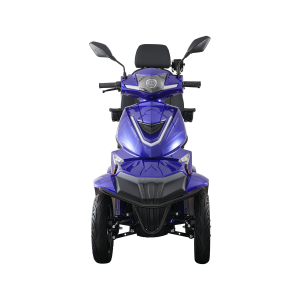
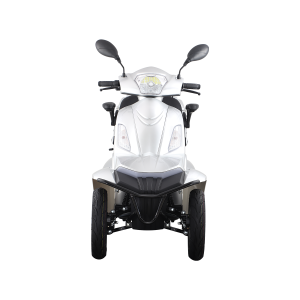
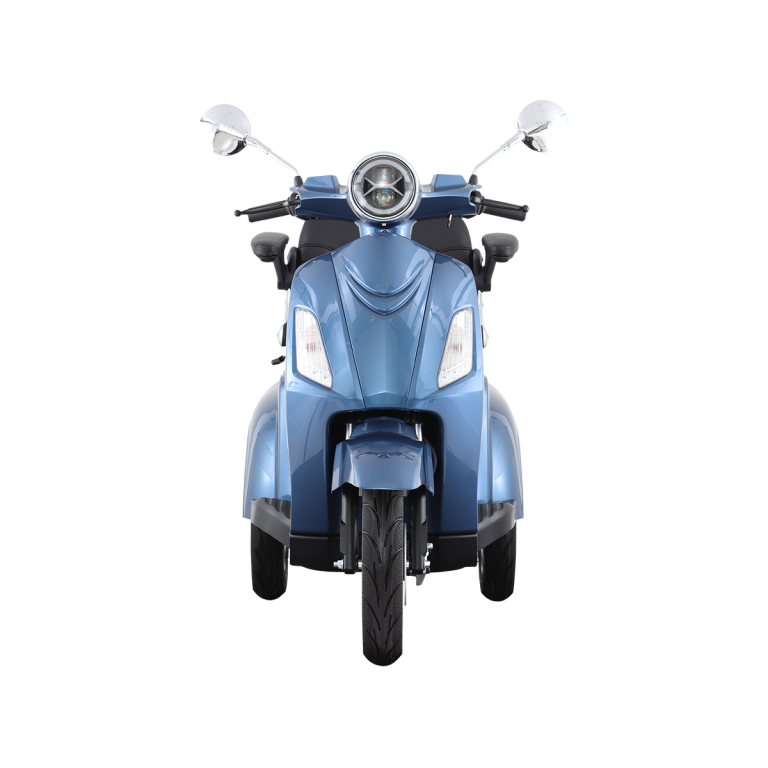
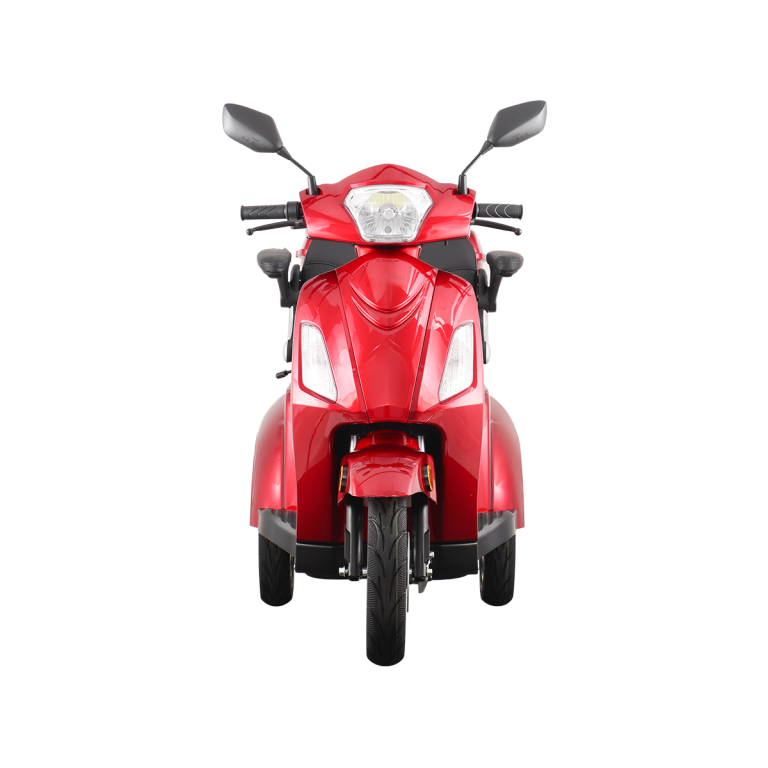
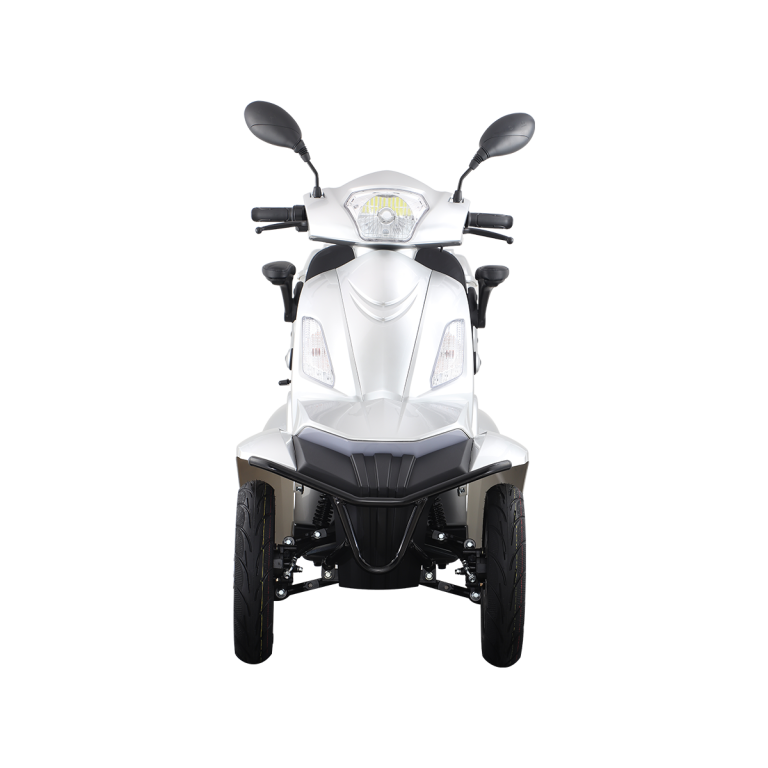
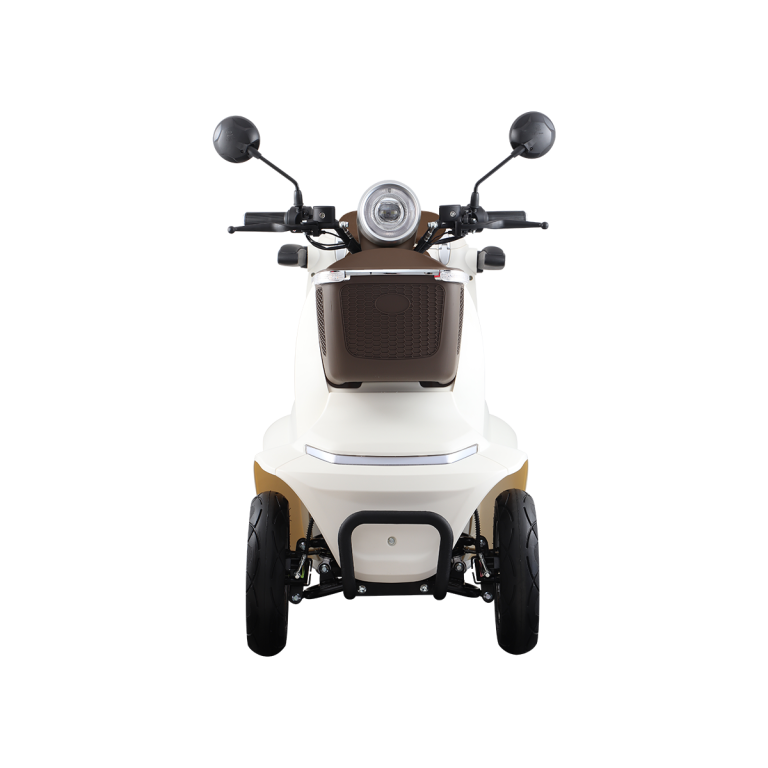
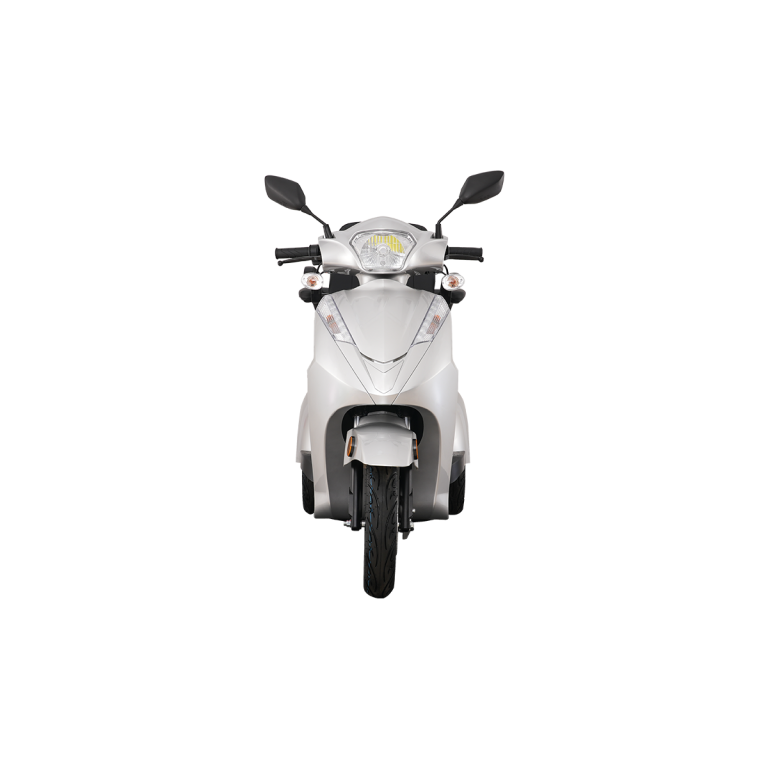
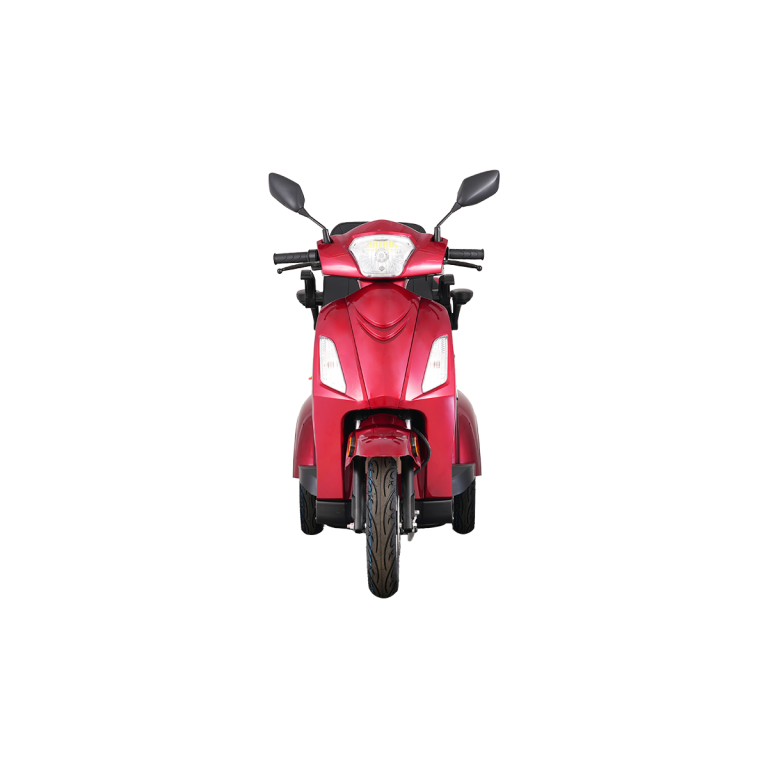
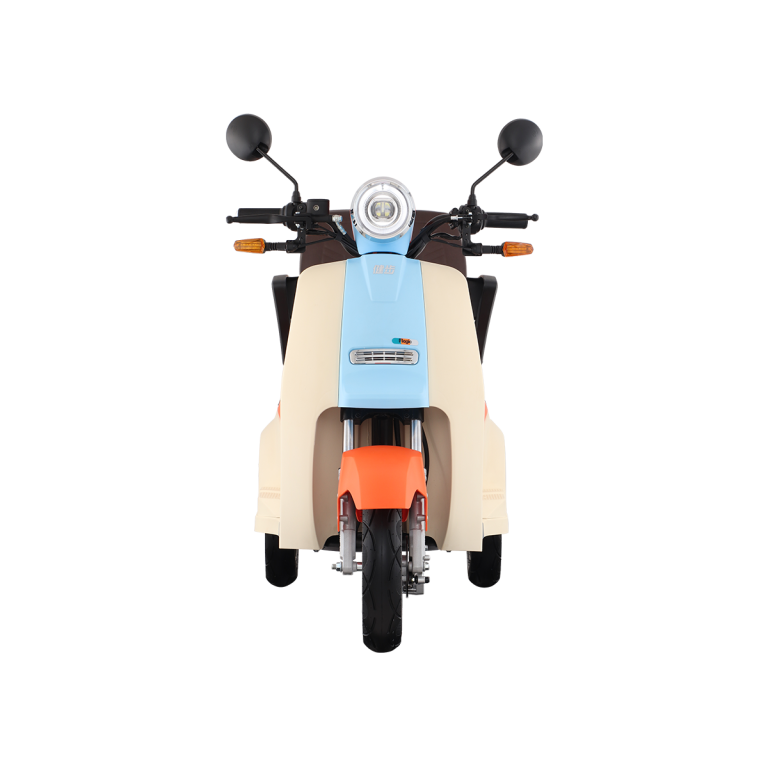
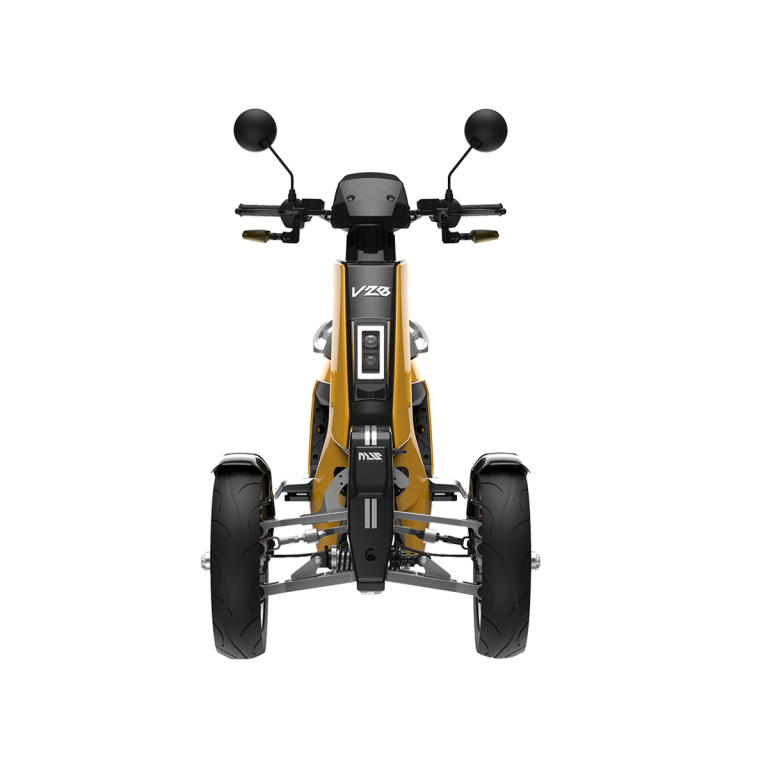
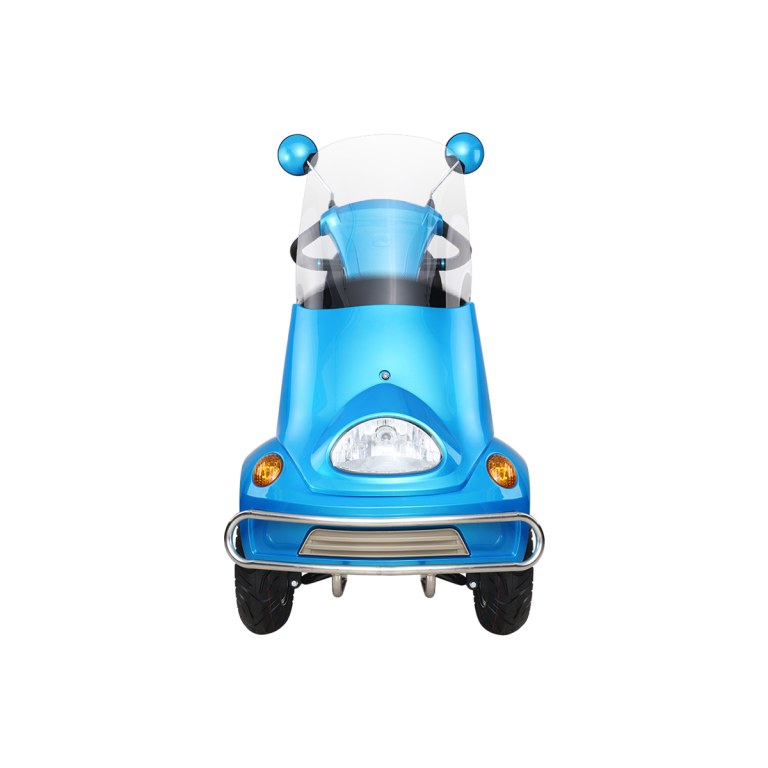
- Compact Mobility Scooters: Typically 60-80 units. For example, our Vista-1 model (SKD) fits 72 units per container.
Vista-1
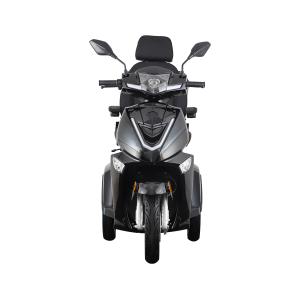
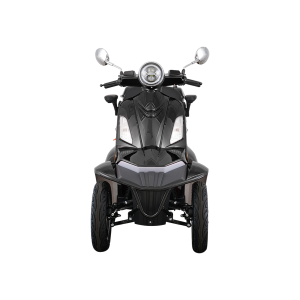
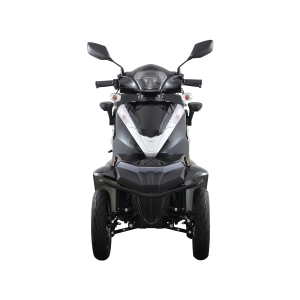
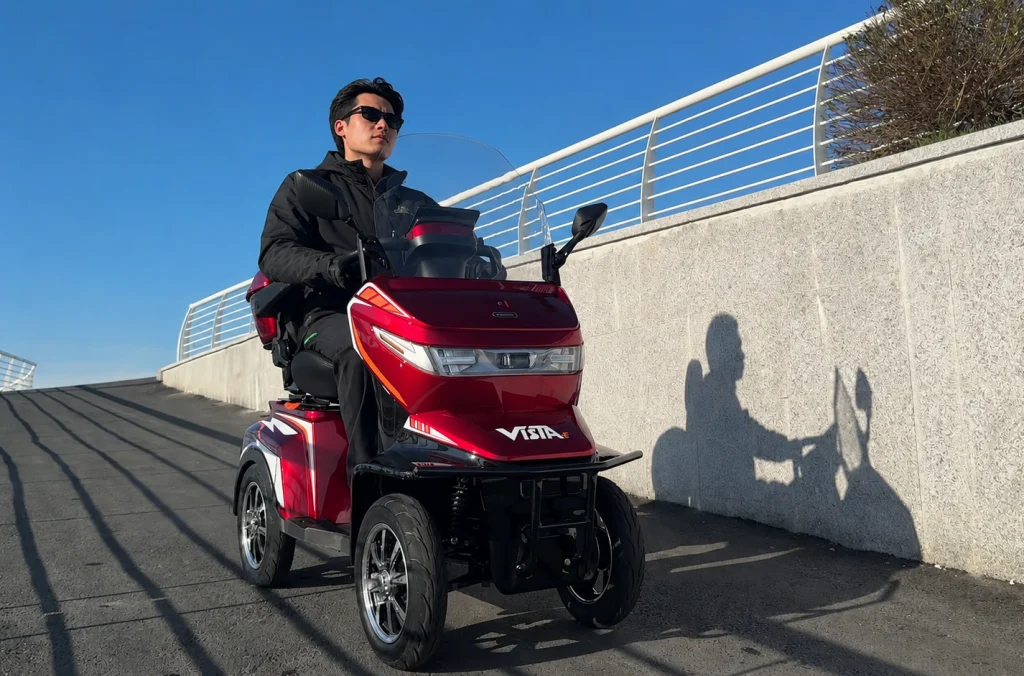
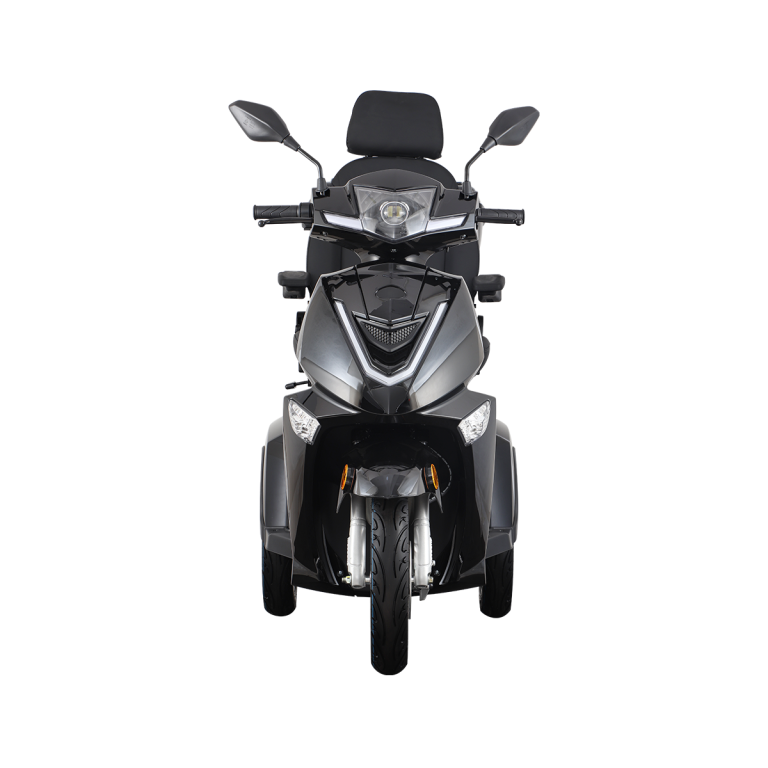
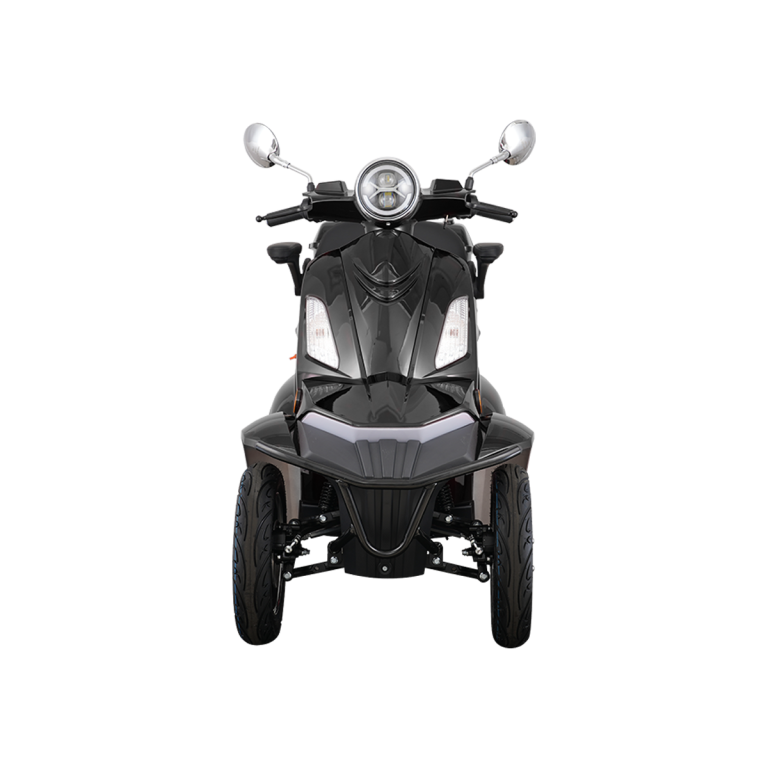
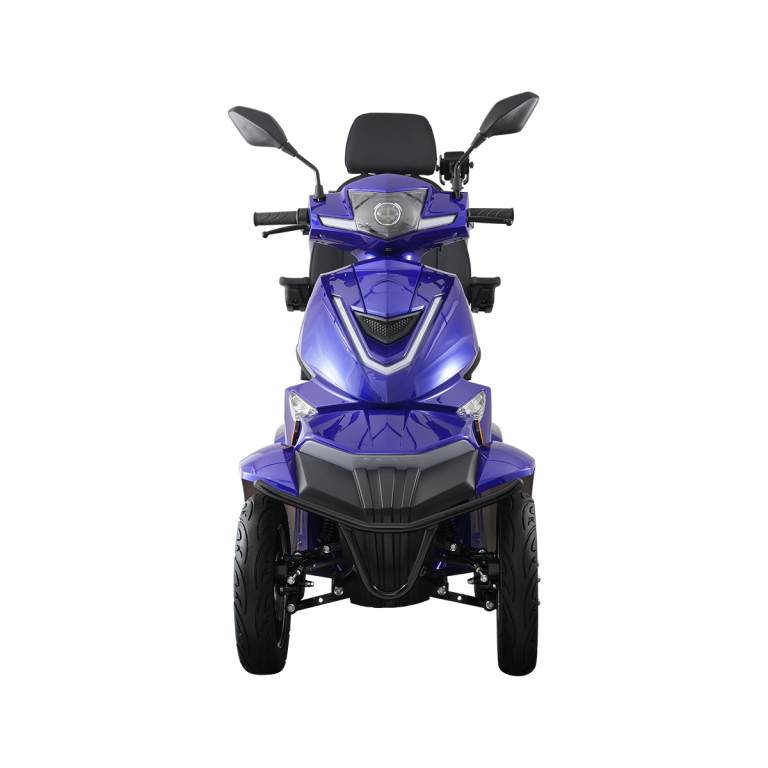
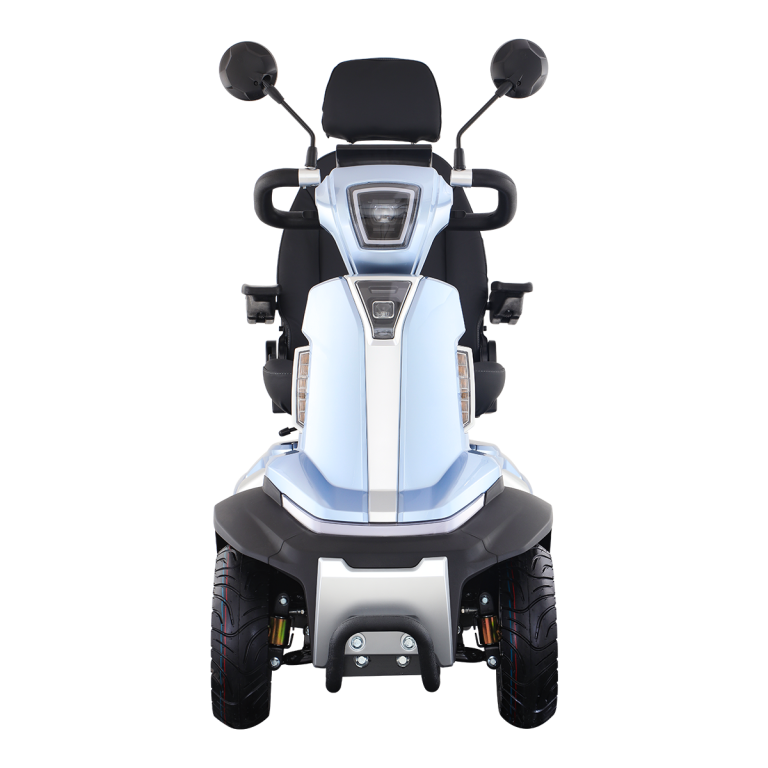
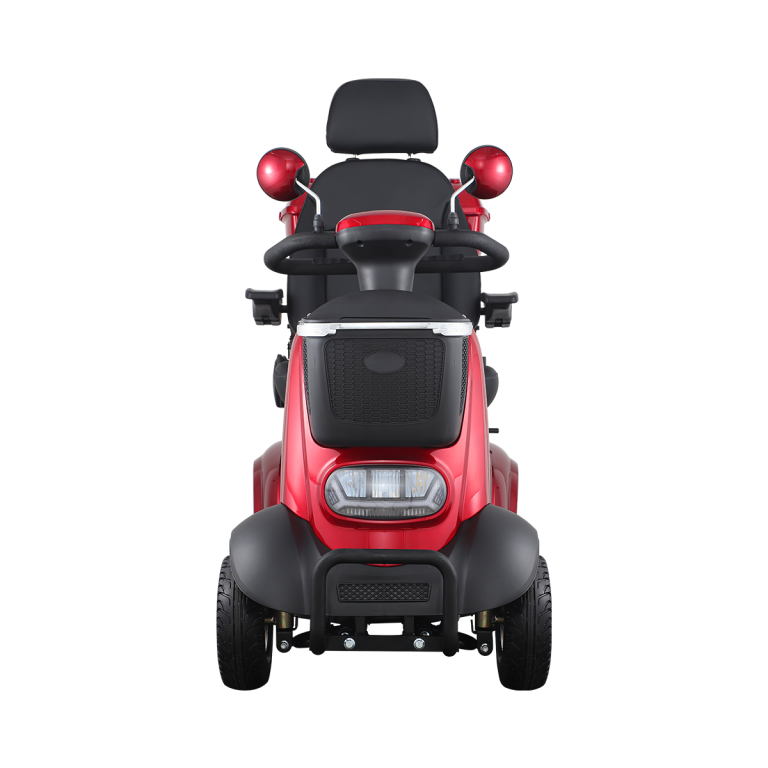
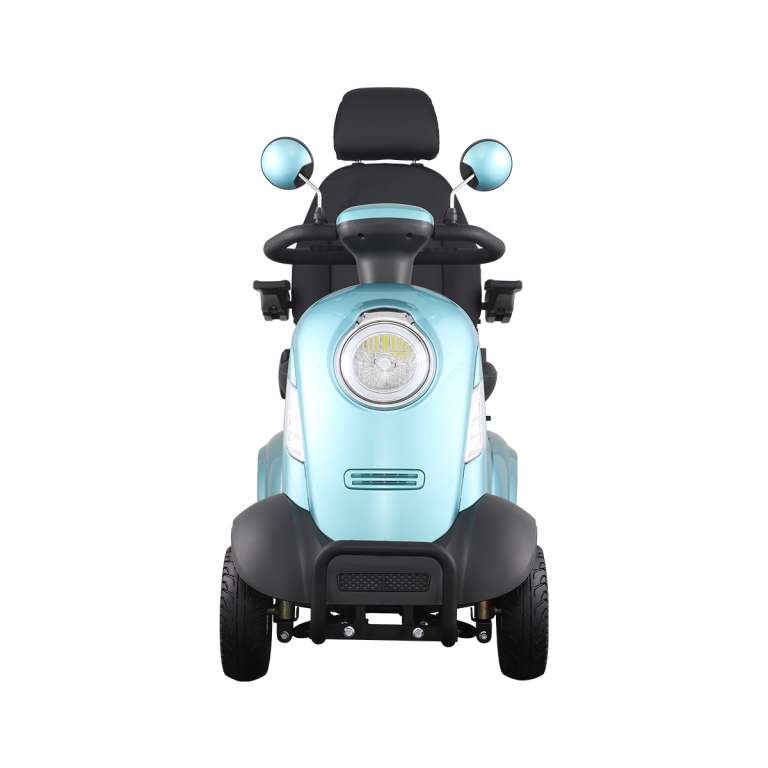
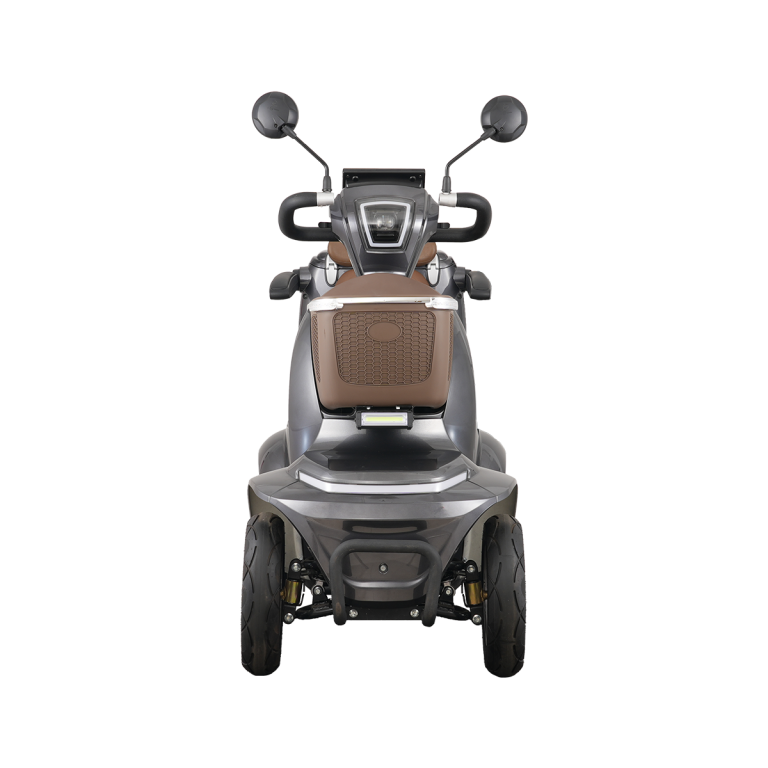
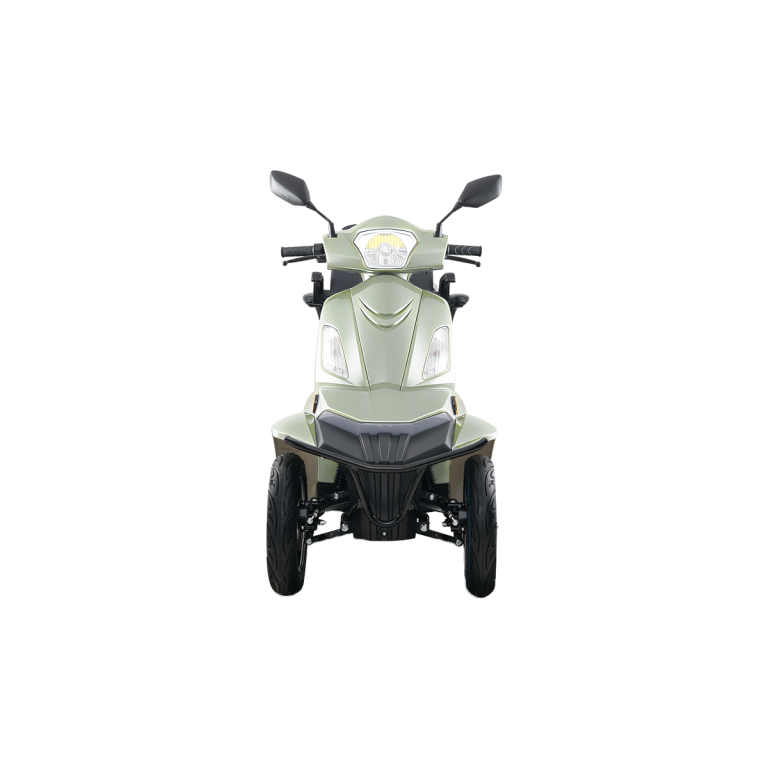
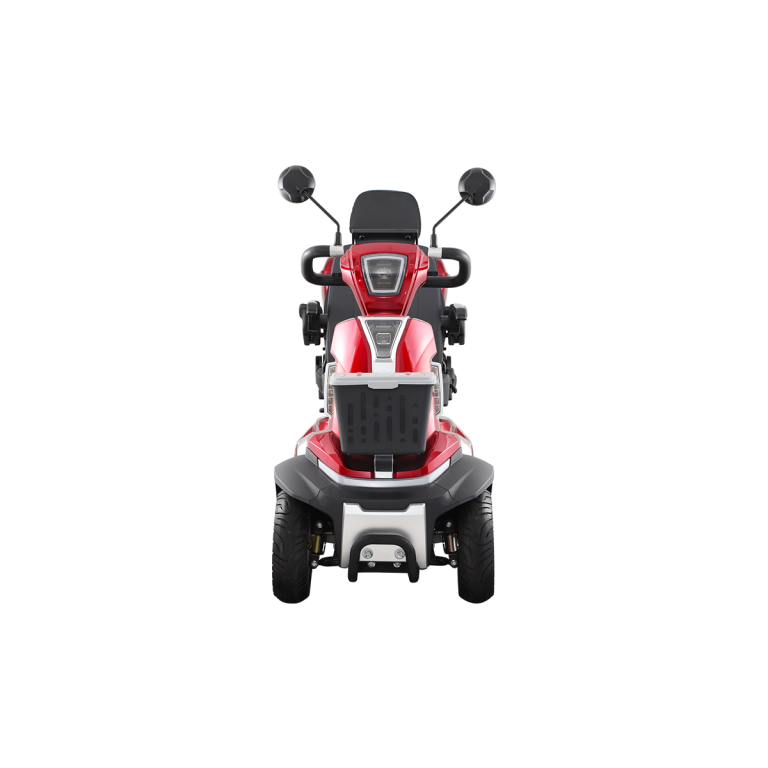
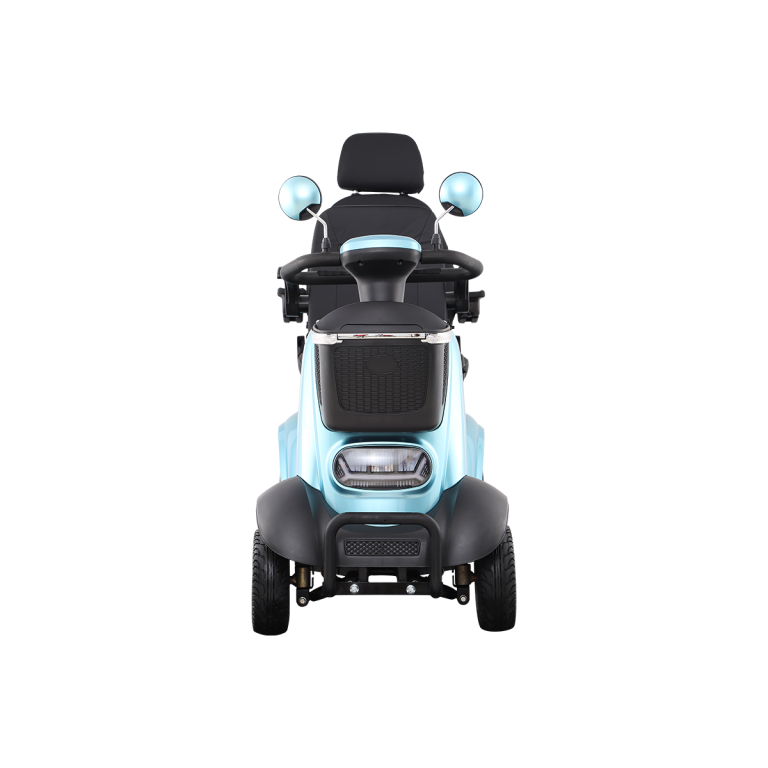
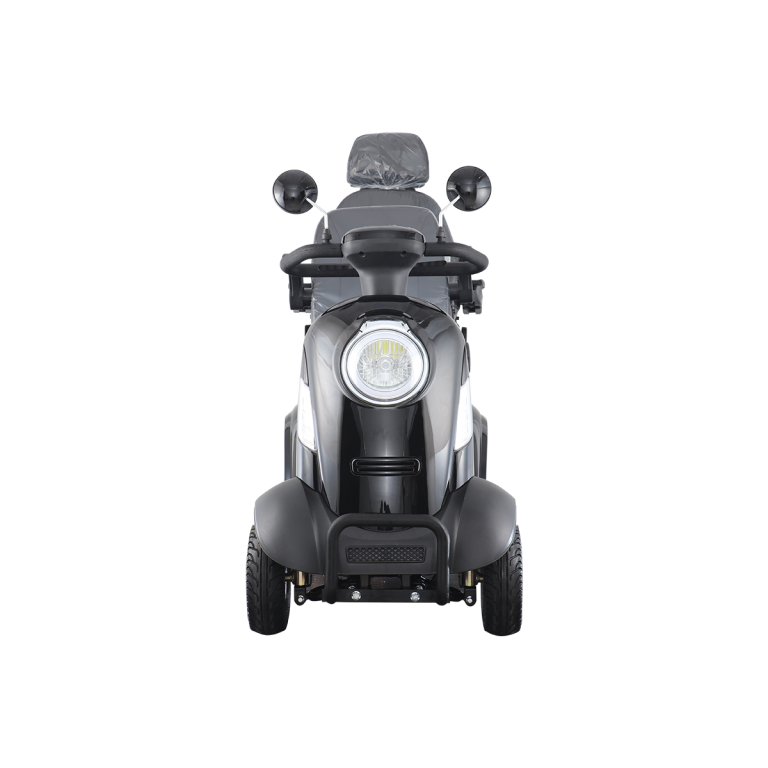
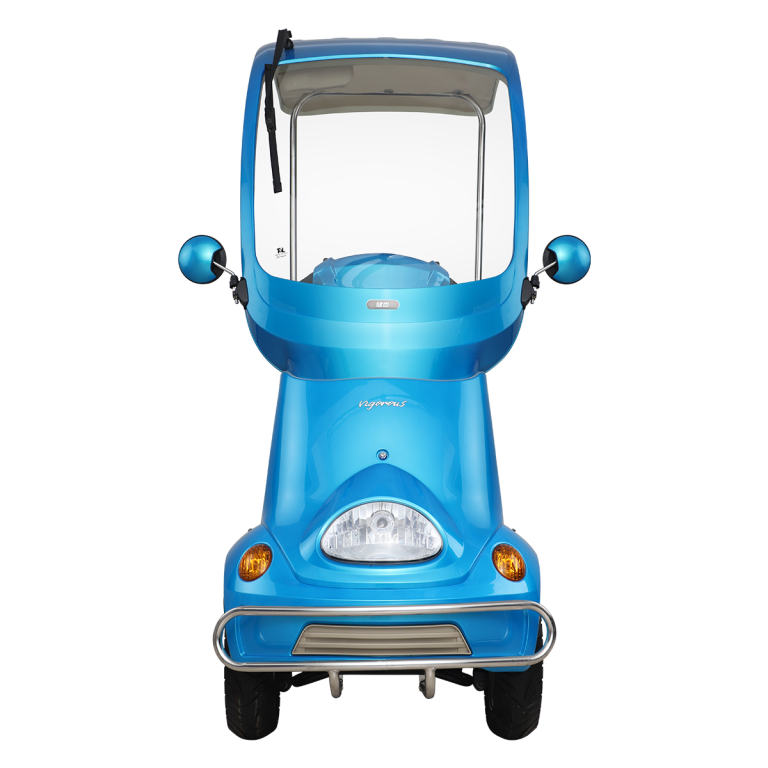
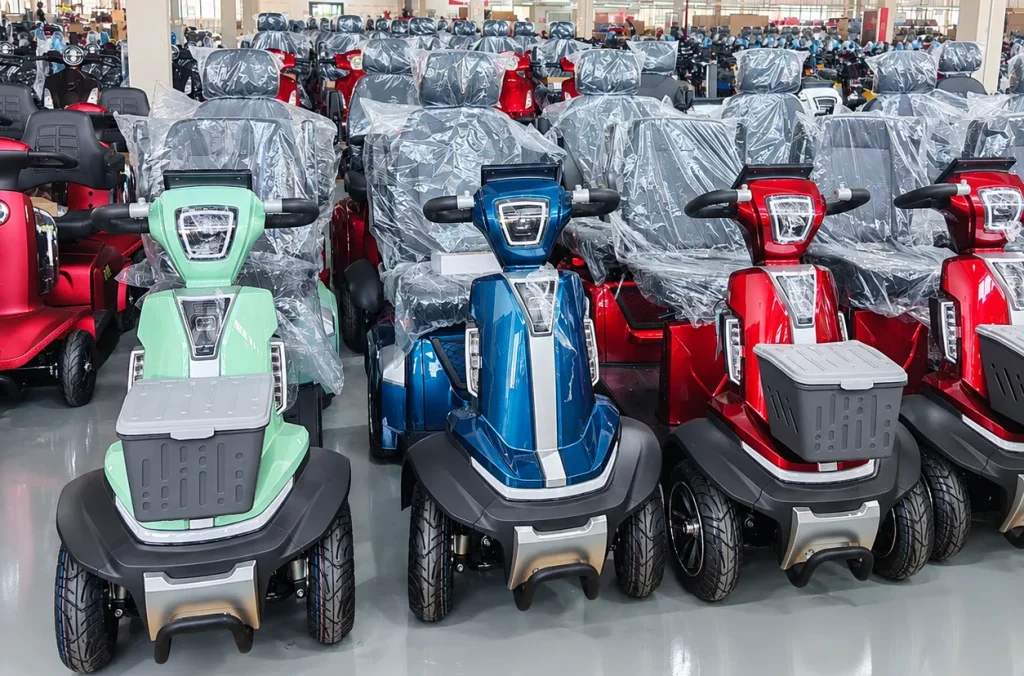
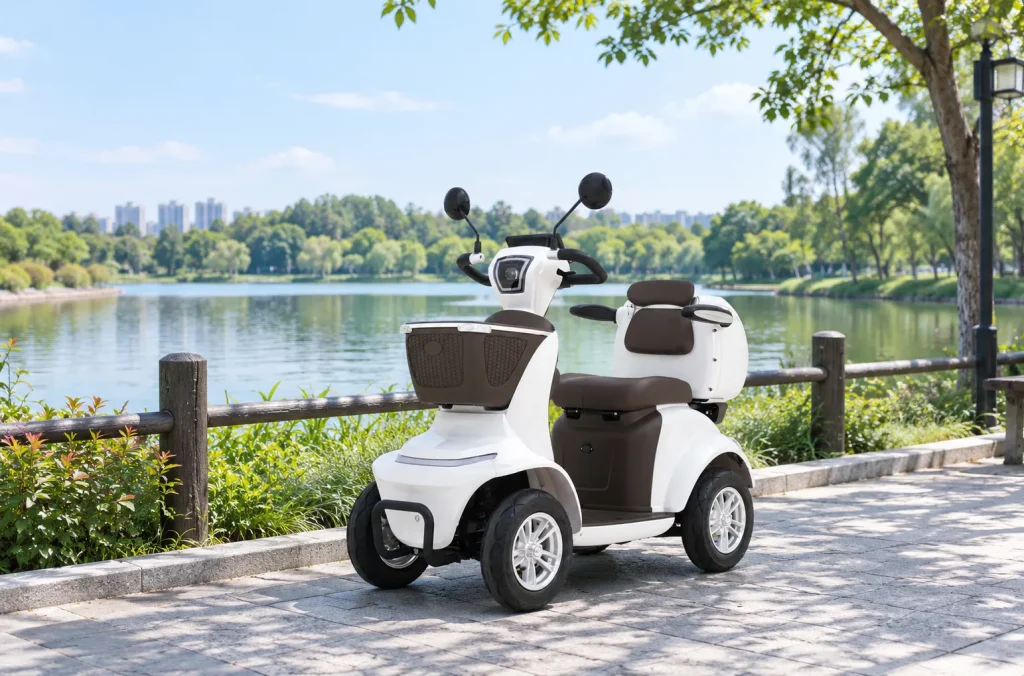
- Heavy-Duty 4-Wheel Scooters: Typically 30-50 units. For example, our Vista Quater-1 (CBU) fits 42 units.
Vista Quater-1
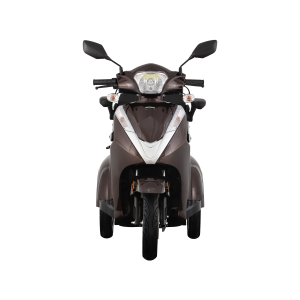
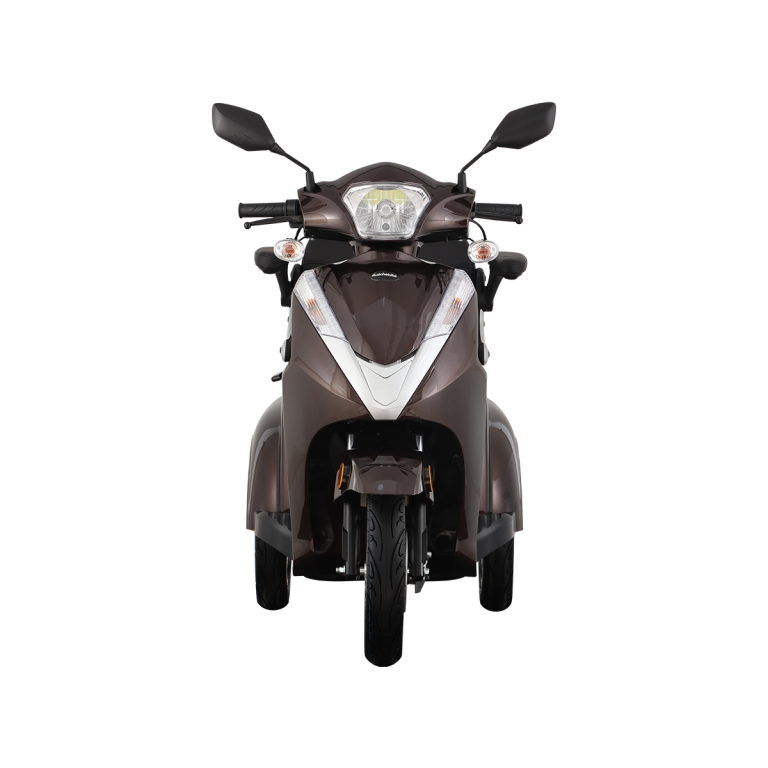
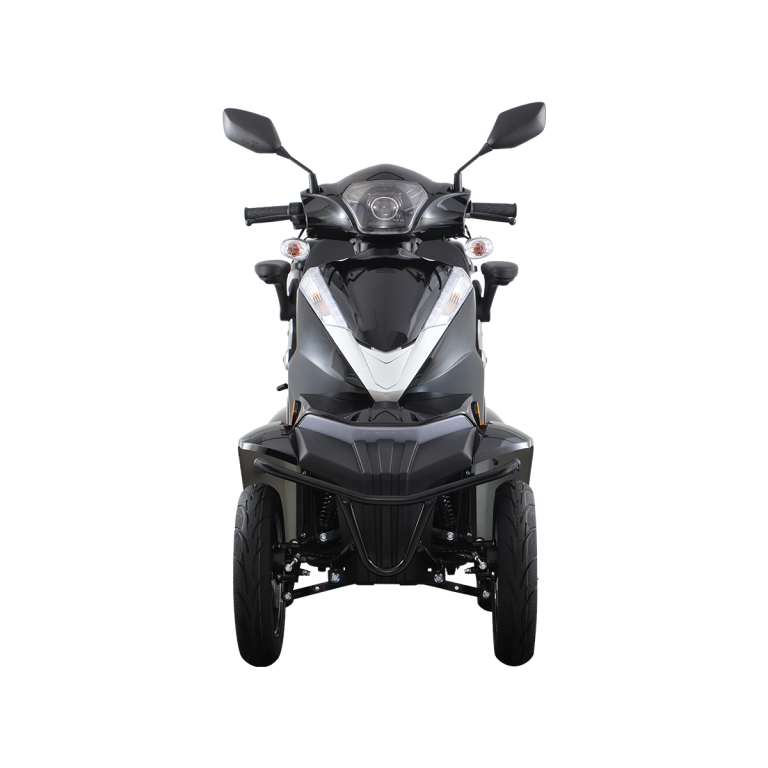
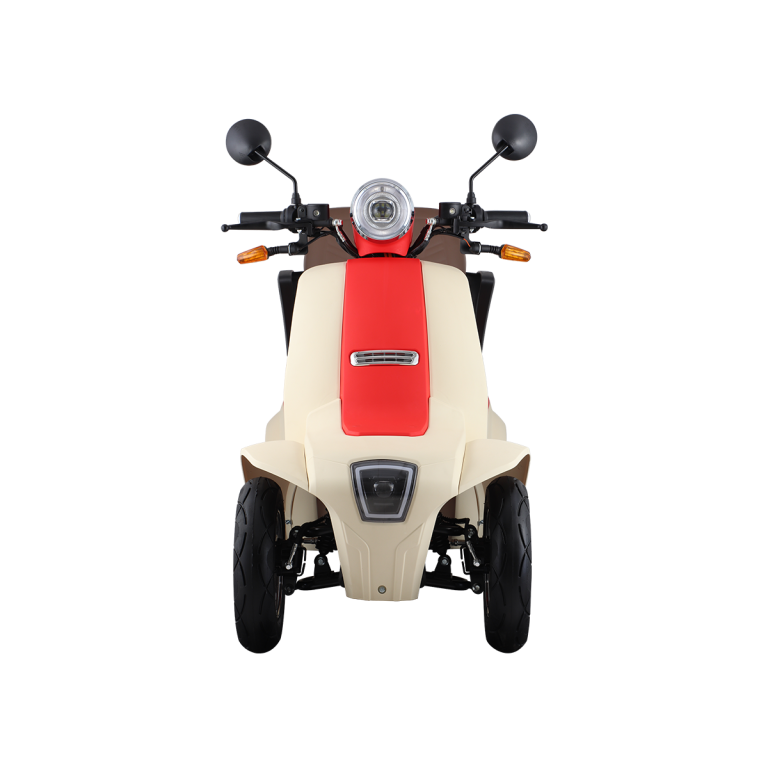
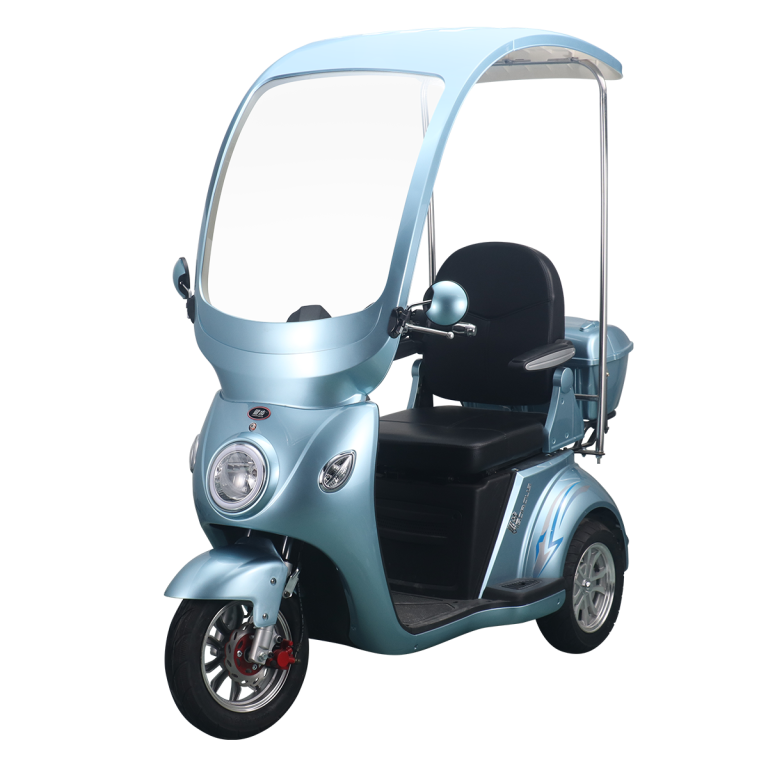
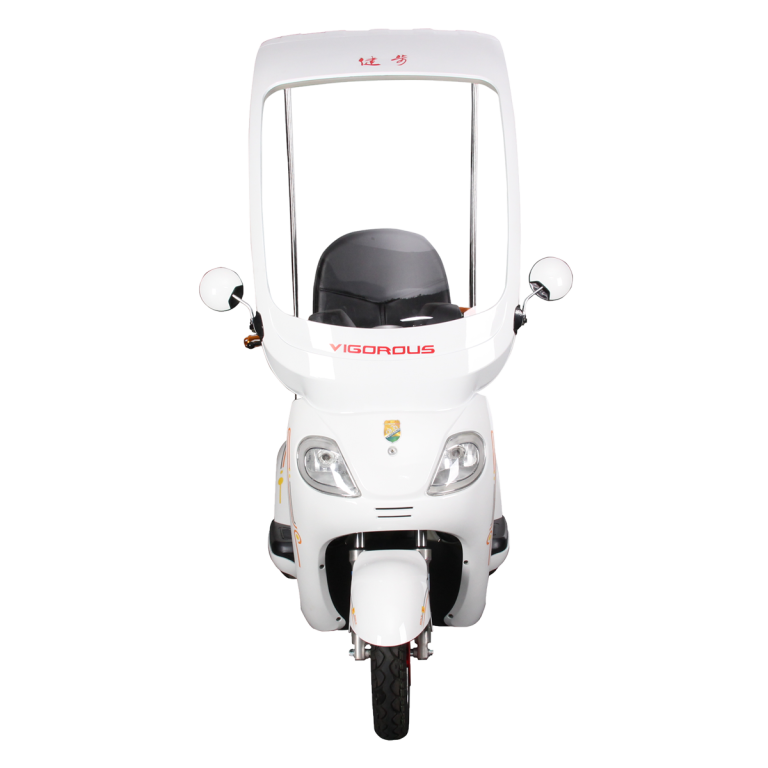
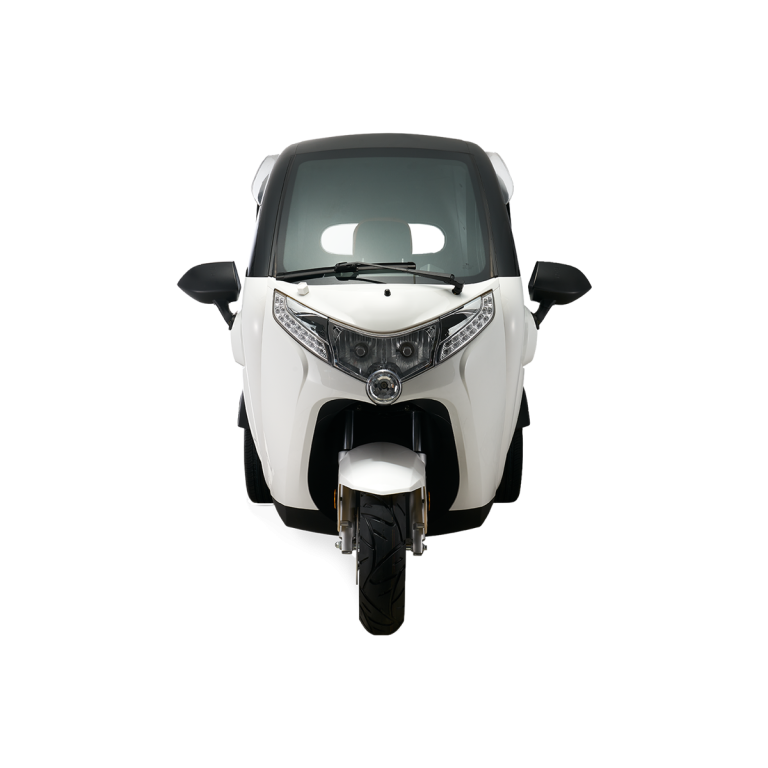
- Fully Enclosed Electric Scooters: Typically 10-20 units. For example, our Polaris-1 (CBU) fits 14 units.
Polaris-1
| Scooter Category | Packaging Method | Units in 40HQ |
| Compact Mobility Scooters | SKD (Recommended) | 60 – 80 Units |
| Heavy-Duty 4-Wheel Scooters | CBU | 30 – 50 Units |
| Fully Enclosed Electric Scooters | CBU | 10 – 20 Units |
Pro Tip: While 20-foot containers (20GP) can be used, their capacity is less than half that of a 40HQ, and the unit freight cost is significantly higher. For wholesale import business, the 40HQ is almost always the most cost-effective choice. Given the 2026 shipping market fluctuations, maximizing 40HQ utilization is the most effective way to protect your margins.
How Vehicle Design Impacts Logistics
When comparing different models, you might focus on aesthetics and features, often overlooking how design details drastically affect logistics costs.
The final loading quantity depends not just on the packaging method (SKD/CKD/CBU), but on the physical dimensions of the scooter. For instance, fully enclosed bodies usually have longer wheelbases than open models, and canopy models occupy more vertical space than standard versions, naturally requiring larger packaging frames.
These design choices can reduce the number of units per container by 20-30%, directly hitting your cost-per-unit. This explains why fully enclosed electric vehicles only fit 10-20 units, whereas compact mobility scooters can fit nearly 60-80 units.
Maximizing Safety with Steel Frames
Quantity is the source of profit, but safety is the bottom line. If vehicles arrive damaged, loading extra units is meaningless. To fit more scooters into a limited space while ensuring they survive the ocean voyage intact requires specialized reinforcement.
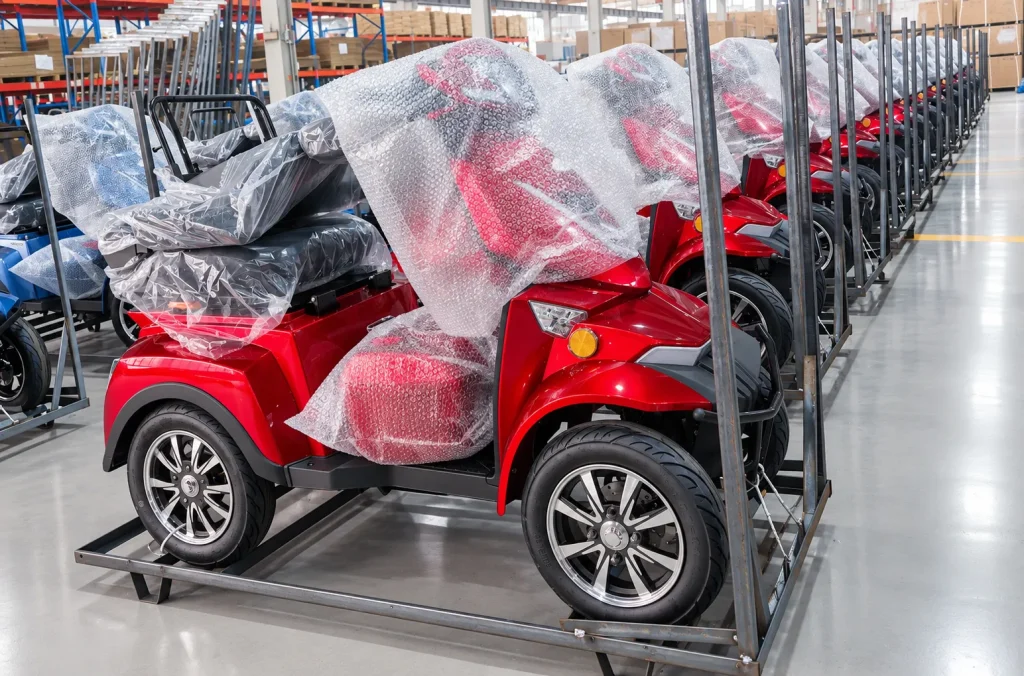
We customize a dedicated steel frame for every exported vehicle. Each mobility scooter is securely fixed within an independent steel cage. This frame acts like a protective shell against scratches, but more importantly, it is stackable. We can stack two frames vertically, utilizing the container’s height while ensuring the lower vehicles do not bear the weight of the upper ones.

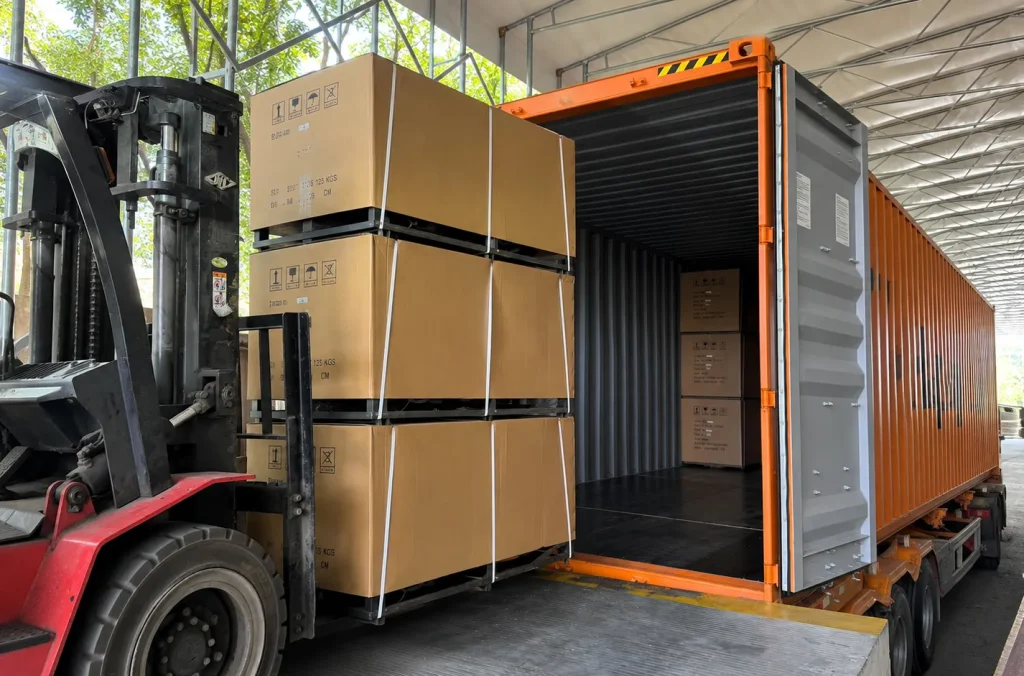
When your team unloads at the destination, you simply lift out the packaging crates in order. Each crate contains all the parts needed to assemble a complete vehicle, creating an orderly process that greatly improves efficiency.

Final Thoughts on Mobility Scooter Wholesale Logistics
Maximizing container utilization is not simply about “loading more”; it is the perfect combination of packaging strategy, model selection, and steel frame safety structures. By planning meticulously with the factory in advance, you can not only significantly reduce your cost per unit but also minimize the risks associated with transportation.
Choosing the right partner for your mobility scooter wholesale business means looking beyond the product to the logistics that deliver it.
Need a custom loading plan for your specific market?